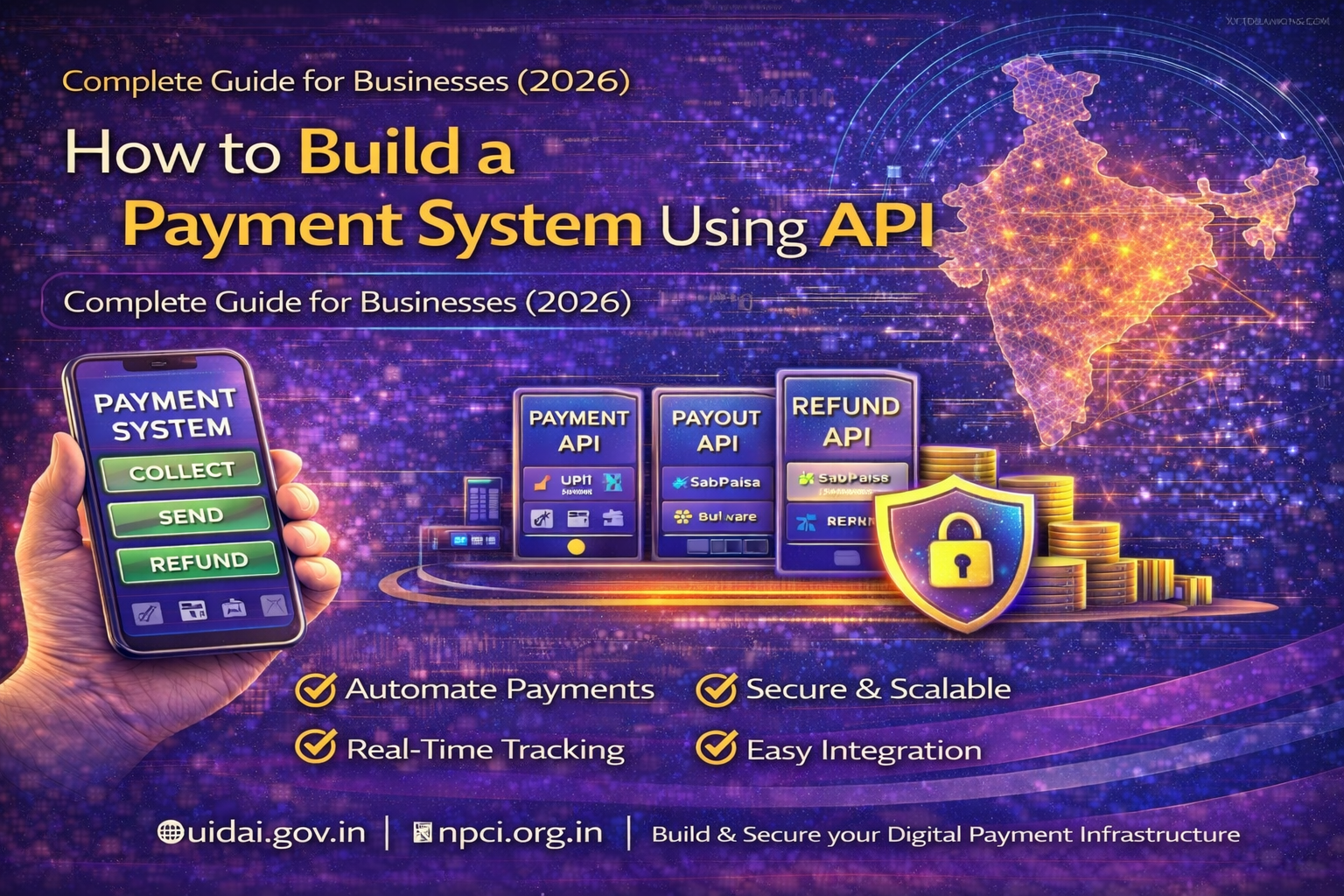
How to Build a Payment System Using API: Complete Guide (2026)
If you want to create a modern fintech platform, marketplace, subscription product, or digital commerce solution, learning how to build a payment system using API is essential. API-based payment systems allow businesses to collect money, send payouts, automate workflows, and scale operations without relying on manual processes.
In India, digital payments are growing rapidly across e-commerce, fintech, software platforms, and service marketplaces. Businesses that build a payment system using API can offer faster transactions, better automation, stronger reporting, and a more seamless user experience.
Inbound Links:
https://nxtbanking.com/dmt-api
https://nxtbanking.com/bbps-api
What is a Payment System
A payment system is the complete infrastructure used to move money between users, businesses, banks, and service providers.
A payment system may include:
- Payment collection
- Payment authorization
- Settlement
- Refund processing
- Payouts
- Transaction tracking
- Reconciliation
- Fraud control
In simple terms, it is the system that allows a business to receive money, manage it, and disburse it when needed.
What Does It Mean to Build a Payment System Using API
When you build a payment system using API, you connect your application, website, or backend with payment service providers through APIs instead of building all financial infrastructure from scratch.
This means your platform can use APIs for:
- payment collection
- bank transfers
- UPI payments
- refunds
- payout automation
- beneficiary verification
- status tracking
- reporting and reconciliation
Instead of manually handling payments, your software manages them programmatically.
Why Businesses Build Payment Systems with APIs
Faster Development
APIs help businesses launch payment functionality quickly without building banking rails from the ground up.
Lower Infrastructure Cost
You do not need to become a bank or build direct settlement systems yourself.
Better Automation
API-based systems automate collections, payouts, refunds, and reconciliation.
Scalability
As the number of customers and transactions grows, APIs make it easier to scale operations.
Better User Experience
Users expect quick, reliable, and digital payment flows across web and mobile products.
Core Components Required to Build a Payment System Using API
User Interface Layer
This is where customers or operators interact with the payment system.
Examples:
- checkout page
- payment form
- payout dashboard
- admin panel
- transaction history page
Backend Payment Engine
This is the core system that handles:
- request creation
- authentication
- payment processing
- webhook handling
- status checks
- refund initiation
- payout workflows
This layer is critical when you build a payment system using API.
Payment Gateway Integration
A payment gateway helps businesses accept incoming payments from customers using:
- cards
- UPI
- net banking
- wallets
Payout API Integration
A payout API helps businesses send money out to:
- vendors
- employees
- partners
- customers
- merchants
Inbound Link:
https://nxtbanking.com/blog/payment-gateway-vs-payout-api
Database and Ledger Layer
You need a reliable system to store:
- transaction records
- user payment history
- status updates
- refund records
- payout references
- reconciliation data
Reconciliation and Reporting
A payment system must track:
- successful payments
- failed transactions
- pending statuses
- settlements
- refunds
- chargebacks
- payout reports
Security and Compliance Layer
A payment system handles sensitive financial data, so it must include:
- encryption
- secure authentication
- access control
- logs
- fraud checks
- audit tracking
Common Types of Payment APIs Used
Payment Gateway API
Used to collect money from users during checkout.
Payout API
Used to send funds to bank accounts, UPI IDs, or wallets.
Refund API
Used to return money to customers after cancellation or dispute.
Verification API
Used to verify beneficiary or bank account details before payment or payout.
Webhook or Callback API
Used to receive real-time updates after payment status changes.
Subscription or Recurring Payment API
Used when businesses need scheduled billing.
Step-by-Step Process to Build a Payment System Using API
Step 1: Define the Business Model
Before development starts, identify how money will flow in your business.
Ask:
- Will you collect payments from customers
- Will you also send payouts
- Do you need refunds
- Will you support subscriptions
- Do vendors or agents need settlement
- Will users transact through web, mobile, or both
This defines the architecture of the system.
Step 2: Map the Payment Flow
A clear payment flow is necessary before API integration.
A common flow may look like:
- User selects service or product
- System creates payment order
- Customer completes payment
- Payment status is confirmed
- Order is marked successful
- Settlement is recorded
- Refund or payout is triggered if needed
When you build a payment system using API, flow design matters as much as coding.
Step 3: Choose the Right API Providers
Select providers based on your business requirements.
Important factors:
- payment modes supported
- payout capability
- uptime and reliability
- documentation quality
- reporting tools
- status APIs
- webhook support
- pricing and settlement terms
- customer support
Inbound Link:
https://nxtbanking.com/contact
Step 4: Design the User Journey
Your payment experience should be simple and trustworthy.
Key screens may include:
- cart or order summary
- payment method selection
- confirmation page
- transaction history
- refund status
- payout dashboard for operators
A poor user flow reduces conversion even if the backend is technically strong.
Step 5: Build the Backend Integration Layer
Your backend should handle:
- order creation
- API authentication
- payment request generation
- request validation
- transaction reference storage
- webhook verification
- payout request handling
- error management
- reconciliation logic
This is the core technical layer when you build a payment system using API.
Step 6: Integrate Payment Collection APIs
Add collection flows such as:
- UPI
- card payments
- net banking
- wallet payments
Each payment initiation should generate a unique order or reference ID.
The system should also handle:
- success
- failure
- pending
- cancellation
Step 7: Integrate Payout APIs if Needed
If your platform also sends money, integrate payout functionality for:
- seller settlements
- refunds
- partner commissions
- salary disbursement
- cashback
Inbound Link:
https://nxtbanking.com/payout-api-how-it-works/
Step 8: Add Transaction Status Tracking
Not all transactions return final status instantly. Your system should support:
- status check API calls
- callback processing
- retry-safe logic
- update of final result in database
A strong status handling flow prevents confusion and support issues.
Step 9: Add Refund and Reversal Logic
If your business handles failed orders, cancellations, or service disputes, refund automation is important.
Your refund flow should include:
- refund request creation
- approval if needed
- refund API trigger
- refund status tracking
- reconciliation record update
Step 10: Implement Security Controls
Security must be built into the architecture from the start.
Important controls include:
- HTTPS encryption
- server-side credential storage
- token-based API authentication
- input validation
- access control
- audit logs
- duplicate transaction prevention
- secure callback verification
Outbound Links:
https://www.rbi.org.in/
https://www.npci.org.in/
Step 11: Build Admin Dashboard and Reports
Internal teams need visibility into the payment system.
Useful dashboard modules include:
- payments received
- payouts sent
- failed transactions
- pending transactions
- refunds
- settlement reports
- API logs
- beneficiary records
Step 12: Test in Sandbox Environment
Before going live, test scenarios such as:
- successful payment
- failed payment
- pending status
- duplicate order
- refund request
- payout initiation
- payout failure
- invalid beneficiary
- webhook handling
- reconciliation mismatch
Testing is a major part of any effort to build a payment system using API.
Step 13: Go Live and Monitor
After launch, monitor closely:
- success rate
- pending transactions
- payment drop-offs
- refund turnaround time
- payout failures
- API latency
- webhook delivery
- settlement accuracy
A payment system is not a one-time build. It needs continuous monitoring and improvement.
Security Best Practices
Encrypt Sensitive Data
All payment-related data should be encrypted during transfer and storage where appropriate.
Protect API Credentials
Keep keys, secrets, and tokens on the server side only.
Use Role-Based Access
Limit who can approve refunds, manage payouts, or view reports.
Verify Webhooks
Never trust callback data without signature or authenticity validation.
Prevent Duplicate Transactions
Use unique transaction IDs and idempotent handling.
Maintain Audit Logs
Every payment action should be traceable for support and compliance.
Common Challenges When You Build a Payment System Using API
Failed Transactions
Incorrect user input, banking errors, or provider-side issues can cause payment failures.
Pending Status Issues
Some transactions remain unresolved for a period and need later confirmation.
Reconciliation Complexity
Money movement, settlement timing, and status mismatch can create reporting challenges.
API Downtime
Your provider’s infrastructure affects your payment availability.
Refund Delays
Without proper refund flow design, customer support burden increases.
User Drop-Off at Checkout
A complicated payment journey reduces conversion rates.
Best Practices for Businesses
Start with the Core Flow
Launch the most important payment journey first, then add advanced modules later.
Keep Collection and Payout Logic Separate
Even if both exist in the same platform, the workflows should be modular.
Use Real-Time Tracking
Always provide status visibility to both users and internal teams.
Design for Failure Cases
Your system should handle failed, pending, and duplicate cases gracefully.
Reconcile Daily
Payment systems need strong finance operations in addition to good code.
Inbound Links:
https://nxtbanking.com/automate-business-payments-using-api/
https://nxtbanking.com/blog/bulk-payout-api-integration-guide
Who Should Build a Payment System Using API
This approach is useful for:
- fintech startups
- marketplaces
- e-commerce businesses
- SaaS platforms
- lending companies
- insurance platforms
- service aggregators
- reseller and distributor networks
FAQs
What does it mean to build a payment system using API
It means integrating payment and payout APIs into your application so payments can be collected, processed, tracked, and managed programmatically.
What APIs are needed for a payment system
Common APIs include payment gateway APIs, payout APIs, refund APIs, status APIs, verification APIs, and webhook integrations.
Is it difficult to build a payment system using API
It requires backend development, workflow planning, security implementation, and testing, but APIs make the process much easier than building payment rails from scratch.
Can small businesses build payment systems using APIs
Yes, API-based payment systems are especially useful for startups and small businesses because they reduce operational complexity and scale well.
Conclusion
If you want to create a scalable digital finance workflow, learning how to build a payment system using API is one of the smartest steps you can take. API-based systems help businesses collect money, send payouts, manage refunds, automate reporting, and improve transaction visibility.
The key is to choose the right providers, design a clear payment flow, secure every layer of the system, and build strong reconciliation and monitoring processes. A well-designed API-driven payment system becomes a strong foundation for modern digital growth.