
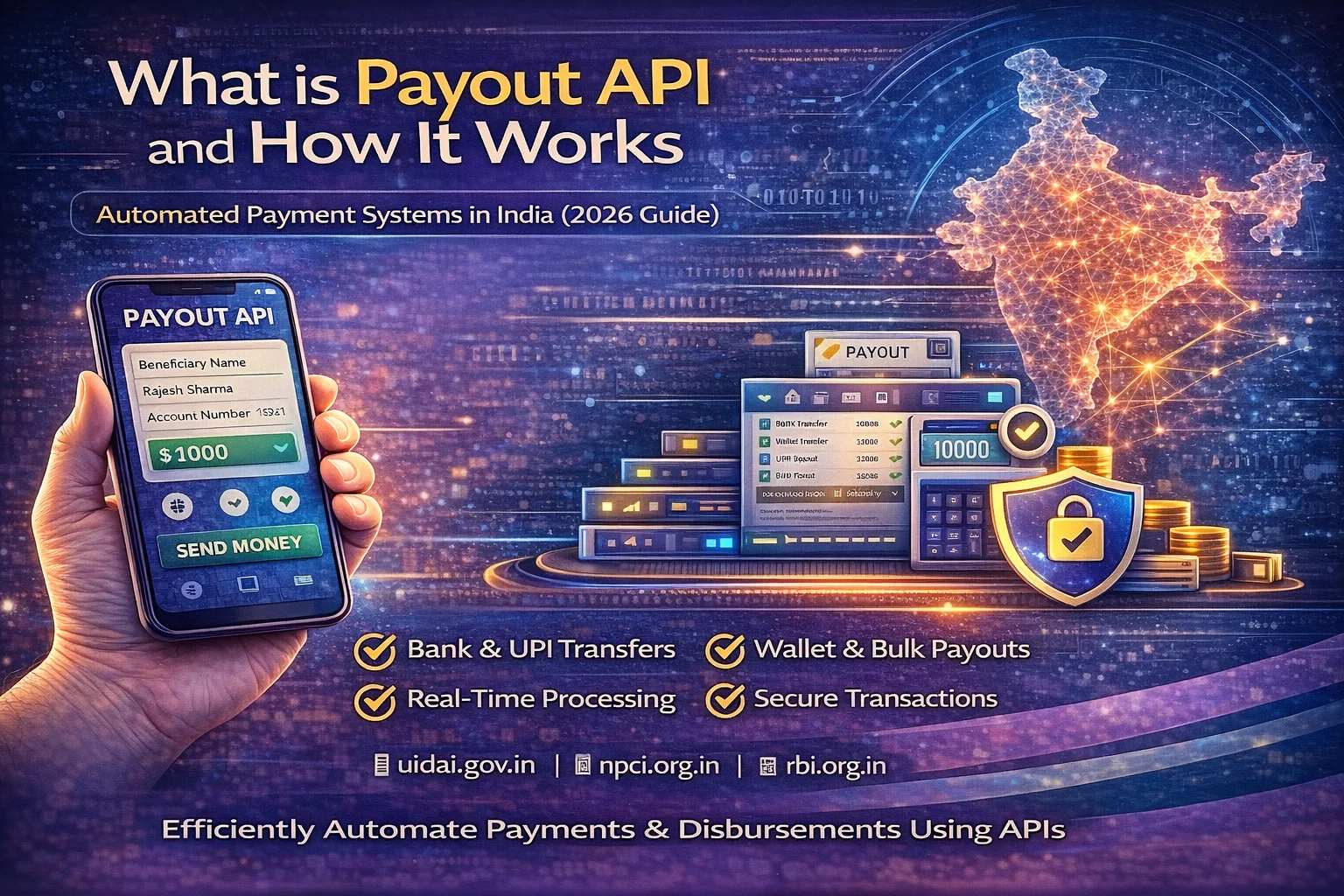
A Payout API is a powerful fintech solution that allows businesses to send money directly to bank accounts, wallets, or UPI IDs through automated systems. It is widely used for bulk payments, vendor payouts, salary disbursement, and refunds.
In India, the demand for automated payment systems is growing rapidly. Businesses are adopting payout APIs to simplify transactions, reduce manual work, and ensure fast and secure fund transfers.
Understanding how a Payout API works helps businesses build efficient payment systems and scale operations.
Inbound Link:
API Marketplace
What is a Payout API
A Payout API is a software interface that enables businesses to transfer funds programmatically to multiple recipients.
It allows:
- Bank account transfers
- UPI payments
- Wallet transfers
- Bulk payouts
- Real-time transactions
These APIs connect your system with banking networks to process payments securely.
How Payout API Works
Step-by-Step Process
- Business initiates payout request
- API validates request and credentials
- Beneficiary details are verified
- Payment is processed via banking network
- Transaction status is returned
- Confirmation is updated in the system
Payouts are processed through systems managed by National Payments Corporation of India.
Outbound Links:
NPCI
Reserve Bank of India
Types of Payout Methods
IMPS Payout
- Instant transfer
- Available 24/7
NEFT Payout
- Processed in batches
- Available during banking hours
RTGS Payout
- Used for high-value transactions
UPI Payout
- Instant transfer using UPI ID
Wallet Payout
- Transfer to digital wallets
Key Features of Payout API
Real-Time Processing
Enables instant fund transfer.
Bulk Payments
Supports multiple transactions at once.
Secure Transactions
Uses encryption and authentication.
Easy Integration
Developer-friendly APIs.
Transaction Tracking
Real-time status updates.
Multi-Channel Support
Supports IMPS, NEFT, RTGS, and UPI.
Use Cases of Payout API
Salary Disbursement
Companies can pay employees automatically.
Vendor Payments
Businesses can pay suppliers quickly.
Refund Processing
E-commerce platforms can process refunds instantly.
Commission Payments
Fintech platforms can distribute commissions.
Loan Disbursement
Lenders can transfer funds to borrowers.
Inbound Links:
API Marketplace
API Marketplace
Benefits of Using Payout API
Faster Payments
Instant transfer improves efficiency.
Automation
Reduces manual intervention.
Cost Efficiency
Lower operational cost.
Improved Accuracy
Reduces human errors.
Better User Experience
Quick payments increase satisfaction.
Scalability
Supports high transaction volume.
How to Integrate Payout API
Step 1
Choose a reliable payout API provider
Step 2
Get API credentials
Step 3
Set up backend system
Step 4
Integrate API endpoints
Step 5
Test in sandbox environment
Step 6
Go live and monitor transactions
Inbound Link:
Contact us
Security Measures in Payout API
API Authentication
Use API keys and tokens.
Data Encryption
Protect sensitive data.
Access Control
Limit system access.
Transaction Monitoring
Track all payouts.
Fraud Detection
Prevent unauthorized transactions.
Challenges in Payout API
API Downtime
May affect payment processing.
Failed Transactions
Incorrect details can cause failures.
Compliance Requirements
Must follow financial regulations.
Integration Complexity
Requires technical expertise.
Future of Payout APIs in India
The future of Payout API includes:
- Faster real-time payments
- AI-based fraud detection
- Increased API adoption
- Expansion of UPI systems
- Automation of financial operations
FAQs
What is a Payout API
It is an API that allows businesses to send money programmatically.
How does a payout API work
It processes payment requests and transfers funds through banking systems.
Is payout API secure
Yes, it uses encryption and authentication.
Who uses payout APIs
Businesses, fintech companies, e-commerce platforms, and startups.
Conclusion
A Payout API is essential for modern businesses that need fast, secure, and automated payment systems. It simplifies bulk payments, improves efficiency, and enhances customer experience.
By integrating payout APIs, businesses can scale operations and streamline financial transactions in a digital-first economy.
Inbound Link:
API Marketplace