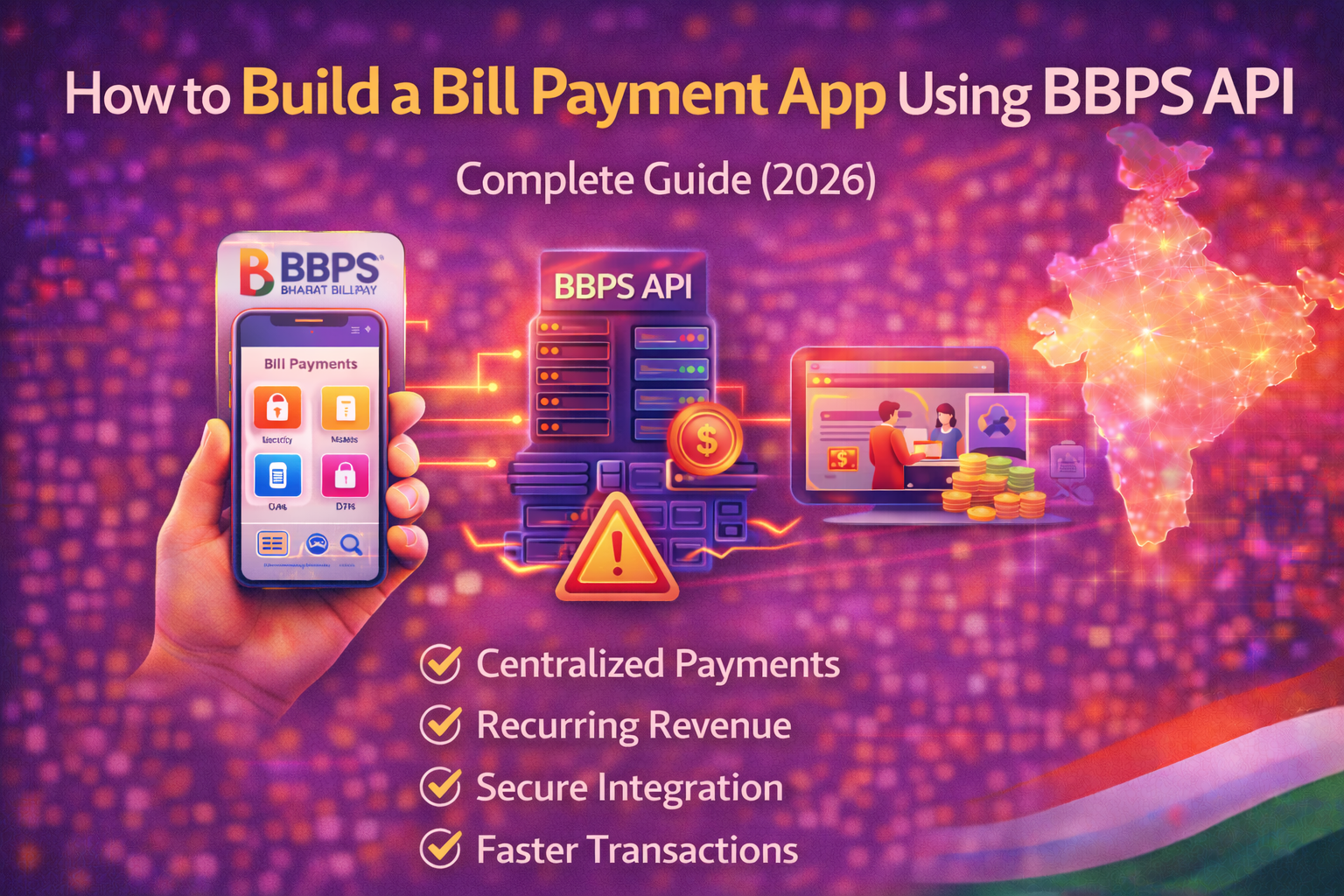
How to Build a Bill Payment App Using BBPS API
If you want to launch a digital payment platform, learning how to build a bill payment app using BBPS API is an important step. A BBPS-powered app allows users to pay utility bills, recharge mobile numbers, and make other recurring payments through a single platform.
As digital payments continue to grow in India, businesses are increasingly investing in bill payment solutions that are secure, scalable, and easy to use. When you build a bill payment app using BBPS API, you can offer real-time bill payments while creating a recurring revenue model for your business.
https://nxtbanking.com/bbps-api
What is BBPS API
BBPS API is an integration layer that allows businesses to connect their app or platform with Bharat Bill Payment System services. Through this API, your app can fetch bill details, process payments, check transaction status, and generate receipts.
BBPS is operated by National Payments Corporation of India and provides a standardized framework for bill payments across different biller categories.
https://www.npci.org.in/what-we-do/bbps/product-overview
Why Build a Bill Payment App Using BBPS API
Building a bill payment app with BBPS API offers several advantages for startups, fintech companies, retailers, and digital service providers.
Centralized Bill Payment Services
A single integration can support multiple payment categories such as:
- Electricity bills
- Mobile recharge
- DTH recharge
- Gas bills
- Water bills
- Insurance premiums
- Loan repayment services
Recurring Revenue Opportunity
Every successful transaction can generate commission, making bill payment apps a sustainable business model.
Better Customer Retention
Users return frequently to pay monthly and recurring bills, increasing long-term engagement.
Scalable Fintech Product
A BBPS-enabled app can start with basic bill payments and later expand into AEPS, DMT, recharge, and other fintech services.
https://nxtbanking.com/aeps-api-provider
https://nxtbanking.com/dmt-api
Key Features of a Bill Payment App
Before you build a bill payment app using BBPS API, you should define the main features your application will offer.
User Registration and Login
Allow users to create accounts securely using mobile number, OTP, email, or password-based login.
Biller Category Selection
Your app should let users choose bill types easily, such as electricity, gas, broadband, insurance, or DTH.
Bill Fetch Functionality
The app should fetch bill details based on consumer number, customer ID, or account number entered by the user.
Payment Processing
Users should be able to complete bill payments quickly through the available payment flow supported by your system.
Transaction History
Users should be able to view previous transactions, payment dates, bill amounts, and current status.
Instant Receipts
After successful payment, the app should generate a digital receipt or confirmation instantly.
Notifications
Send payment confirmation, due date reminders, and failed transaction alerts through SMS, email, or in-app notifications.
Admin Dashboard
An admin panel should help you track transactions, user activity, settlement, commissions, and support requests.
Technology Stack for Building a Bill Payment App
When you build a bill payment app using BBPS API, choosing the right technology stack is essential.
Frontend
You can build the frontend using:
- Flutter
- React Native
- Kotlin for Android
- Swift for iOS
Backend
The backend can be developed using:
- Node.js
- Laravel
- Python
- Java
Database
Popular database options include:
- MySQL
- PostgreSQL
- MongoDB
Cloud and Hosting
Use cloud infrastructure for better scalability and uptime.
- AWS
- Google Cloud
- DigitalOcean
Step-by-Step Process to Build a Bill Payment App Using BBPS API
Step 1: Define Your Business Model
Decide whether your app will target:
- Direct consumers
- Retailers
- Distributors
- White-label partners
This helps define your features, pricing, commission model, and user experience.
Step 2: Choose a BBPS API Provider
The provider you choose will directly impact your app’s performance, uptime, and ease of integration.
Look for:
- High uptime
- Good API documentation
- Sandbox access
- Fast support
- Reliable dashboard
- Transparent pricing
https://nxtbanking.com/contact
Step 3: Plan the App Structure
Create a basic product flow for:
- Signup/login
- Biller category
- Bill fetch
- Bill details review
- Payment confirmation
- Receipt generation
- Transaction history
A clean app flow improves usability and conversions.
Step 4: Design the UI and User Experience
Your interface should be simple, mobile-friendly, and easy to navigate. Since bill payments are repetitive tasks, the experience must be fast and intuitive.
Important UI sections include:
- Home dashboard
- Search biller
- Saved billers
- Payment confirmation screen
- Transaction history
- Support screen
Step 5: Develop the Backend Logic
Your backend should handle:
- User management
- API authentication
- Bill fetch requests
- Payment request submission
- Transaction status polling
- Callback handling
- Logging and reconciliation
This is the core foundation when you build a bill payment app using BBPS API.
Step 6: Integrate BBPS API
At this stage, your development team connects the app with BBPS API endpoints.
Common API functions include:
- Biller list fetch
- Bill detail fetch
- Payment initiation
- Transaction status check
- Callback or webhook processing
Make sure request and response handling is properly mapped.
https://nxtbanking.com/blog/integrate-bbps-api-bill-payments
Step 7: Add Security Layers
Security is critical for any bill payment app. Since your platform handles user data and payment transactions, strong protection is necessary.
Important measures include:
- HTTPS encryption
- Token-based authentication
- Secure credential storage
- Input validation
- Role-based admin access
- Activity logging
Step 8: Test the App in Sandbox
Before launch, test the app thoroughly using the sandbox environment provided by the API provider.
Test scenarios should include:
- Valid bill fetch
- Invalid customer ID
- Successful payment
- Failed payment
- Pending transaction
- Duplicate payment prevention
- Callback response handling
- Server timeout cases
Step 9: Go Live
After testing and approval, move from sandbox to live environment. Use live API credentials and monitor the first set of transactions carefully.
At launch, ensure:
- Biller categories are working
- Receipts are generated
- Payment status updates are syncing
- Support team is ready
- Settlement tracking is active
Step 10: Monitor and Improve
Once live, regularly monitor:
- Transaction success rate
- Failed payment logs
- User retention
- Commission reports
- Settlement status
- Customer complaints
A bill payment app should improve continuously based on real user behavior.
Security Best Practices
When you build a bill payment app using BBPS API, security should not be treated as optional.
Protect User Data
Encrypt sensitive data and avoid exposing internal API credentials on the frontend.
Validate All Inputs
Incorrect consumer numbers, malformed requests, or duplicate actions should be blocked through backend validation.
Maintain Logs
Store logs for bill fetch, payment initiation, callbacks, and failed transactions for support and audit purposes.
Use Secure Hosting
Choose a stable hosting provider with firewall rules, backup systems, and server monitoring.
Common Challenges While Building a Bill Payment App
Businesses may face several challenges during app development.
API Documentation Complexity
If documentation is unclear, integration errors increase.
Biller Validation Issues
Different billers may require different fields and formats.
Pending Transaction Handling
Not every payment gets instant confirmation, so your app must support delayed updates.
Callback Failures
If your webhook or callback system is unstable, final payment status may not sync properly.
UI Complexity
A cluttered interface can reduce trust and lower usage.
https://nxtbanking.com/blog/common-bbps-api-integration-challenges
How a Bill Payment App Makes Money
If you build a bill payment app using BBPS API, revenue can come from several sources.
Transaction Commission
Earn a margin or commission on each successful bill payment.
Distributor or Retailer Network
If your app supports agents or retailers, you can earn from their volume as well.
White-Label Solutions
You can offer your platform as a branded solution for other businesses.
Cross-Selling Fintech Services
Once users are active in the app, you can later add services like AEPS, DMT, and recharge.
Who Should Build a Bill Payment App
This model is ideal for:
- Fintech startups
- Recharge businesses
- Retail payment operators
- Digital wallet companies
- API service providers
- Distributors and reseller networks
FAQsHow long does it take to build a bill payment app using BBPS API
The time depends on app complexity, features, provider documentation, and testing. A basic version can often be developed in a few weeks, while a more advanced app may take longer.
Do I need a developer team to build a bill payment app using BBPS API
Yes, a developer or technical team is usually needed to build the frontend, backend, and API integration properly.
Can I add more services later in the app
Yes, you can start with BBPS and later add AEPS, DMT, recharge, and other fintech services.
Is BBPS API integration secure for app development
Yes, if implemented correctly with proper authentication, encryption, and secure backend practices.
Conclusion
If you want to launch a scalable fintech product, learning how to build a bill payment app using BBPS API is a smart move. A well-designed app can offer recurring payment services, generate stable income, and build long-term customer engagement.
The key to success is choosing the right provider, building a simple user experience, securing your app properly, and testing each payment flow carefully. With the right execution, a BBPS-powered bill payment app can become a strong digital business in 2026 and beyond.
About This Topic
Bharat Bill Payment System (BBPS) is NPCI's standardised bill payment network connecting customers with 20,000+ billers across electricity, gas, water, telecom, insurance, and more. NxtBanking's BBPS API enables two-step bill fetch and payment flows with per-transaction BBPS reference numbers, daily MIS reconciliation, dispute management tooling, and a sandbox environment for testing. Integrating BBPS through NxtBanking gives your product access to India's complete utility payment ecosystem under one contract.
Quick Answers
What is BBPS and what does it cover?
BBPS (Bharat Bill Payment System) is NPCI's standardised bill payment network with 20,000+ registered billers spanning electricity, gas, water, telecom, DTH, insurance, education, and municipal services — enabling one-stop bill payment for consumers and businesses alike.
How does BBPS API integration work?
BBPS API integration involves two sequential REST calls: Bill Fetch (retrieve current due amount using the customer's consumer number) and Bill Payment (debit the customer and confirm payment to the biller). Each transaction receives a unique BBPS transaction reference number for traceability.
Is NxtBanking RBI-compliant for payment APIs?
Yes. NxtBanking operates through RBI-licensed partner banks for all payment services (IMPS, NEFT, RTGS, UPI) and is NPCI-certified for BBPS, AEPS, and UPI flows. All APIs follow RBI's Master Directions on payment aggregators, KYC, and PMLA obligations. We maintain audit logs, data localisation, and consent frameworks compliant with the DPDP Act 2023.
How does NxtBanking handle API downtime and failover?
NxtBanking uses a connected-banking architecture that links a single API credential to multiple RBI-licensed partner banks. When one bank's rails experience degradation or maintenance, the API automatically routes to the next available bank — with no code change required on the client side. This multi-bank failover is what delivers 99%+ transaction success rates and 99.9% API uptime SLA for enterprise clients.
What does it cost to integrate NxtBanking APIs?
NxtBanking offers pay-as-you-go pricing with no setup fees and no minimum commitment for most APIs. Typical pricing: IMPS/UPI payout ₹3–₹8 per transaction, NEFT ₹1–₹3, BBPS bill payment ₹0.50–₹3, AEPS cash withdrawal ₹2–₹5. Enterprise clients on committed volumes negotiate flat-rate pricing. Sandbox access is free and unlimited. Contact sales for a custom quote based on your expected transaction volume.
Key Terms
- BBPS
- Bharat Bill Payment System — an NPCI-regulated interoperable bill payment network covering 20,000+ billers across electricity, gas, telecom, insurance, and more.
- API
- Application Programming Interface — a structured software interface that lets applications communicate with each other over the internet using defined endpoints, authentication, and data formats.
NxtBanking is India's AI-powered fintech API platform trusted by hundreds of fintechs, BC networks, NBFCs, and enterprise companies. Our unified API marketplace covers payout (IMPS, NEFT, RTGS, UPI), BBPS bill payment with 20,000+ billers, AEPS biometric banking, KYC and identity verification (Aadhaar, PAN, Bank, Driving Licence, Voter ID, RC), UPI collection and QR codes, domestic money transfer (DMT), mobile and DTH recharge, Micro-ATM, and travel APIs — all under one master agreement, one set of credentials, and one consolidated monthly invoice.
Every NxtBanking API is backed by a 99.9% uptime SLA, real-time webhook delivery, a full-featured sandbox environment with simulated error scenarios, comprehensive API documentation with Postman collections and code samples in multiple languages, and dedicated technical onboarding support. Production go-live for most APIs is achievable within 7–15 business days after KYC and compliance review. For enterprise clients requiring custom SLAs, dedicated infrastructure, or white-label platform builds, NxtBanking offers tailored commercial terms with no minimum volume commitment at the pilot stage.