
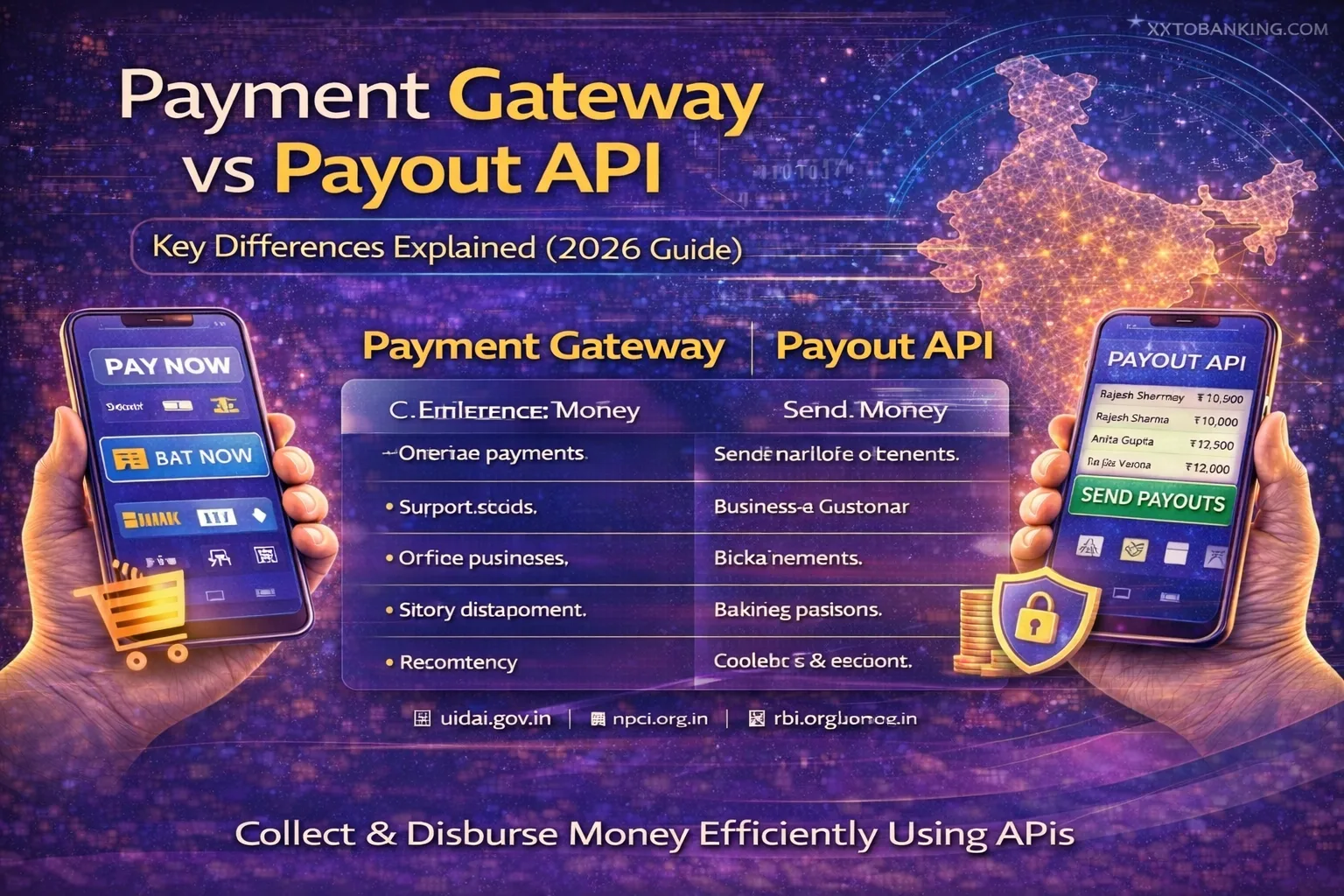
Understanding Payment Gateway vs Payout API is essential for businesses handling digital transactions. While both are important components of modern fintech systems, they serve completely different purposes.
In India, businesses use payment gateways to collect money and payout APIs to send money. Knowing the difference between Payment Gateway vs Payout API helps you build the right payment infrastructure for your business.
https://nxtbanking.com/dmt-api
What is a Payment Gateway
A payment gateway is a system that allows businesses to accept payments from customers through:
- Debit cards
- Credit cards
- UPI
- Net banking
- Wallets
It acts as a bridge between the customer, merchant, and bank to process incoming payments securely.
What is a Payout API
A payout API allows businesses to send money programmatically to:
- Bank accounts
- UPI IDs
- Wallets
It is used for:
- Vendor payments
- Salary disbursement
- Refunds
- Commission payouts
These systems rely on networks governed by National Payments Corporation of India.
Payment Gateway vs Payout API: Core Difference
The fundamental difference is:
- Payment Gateway → Used to receive money
- Payout API → Used to send money
Detailed Comparison: Payment Gateway vs Payout API
FeaturePayment GatewayPayout APIPurposeCollect paymentsSend paymentsDirectionCustomer → BusinessBusiness → CustomerUse CaseOnline purchasesDisbursementsIntegrationCheckout systemBackend systemPayment ModesCards, UPI, Net BankingIMPS, NEFT, RTGS, UPIProcessingCustomer initiatedBusiness initiatedFrequencyPer transactionBulk or automated
How Payment Gateway Works
Step-by-Step Flow
- Customer selects payment option
- Payment details are entered
- Gateway encrypts data
- Bank processes transaction
- Payment status is returned
- Merchant receives confirmation
How Payout API Works
Step-by-Step Flow
- Business initiates payout request
- API validates request
- Beneficiary details are verified
- Payment is processed
- Status is returned
- Confirmation is recorded
Use Cases: Payment Gateway vs Payout API
Payment Gateway Use Cases
- E-commerce payments
- Subscription billing
- Online services
- Booking platforms
Payout API Use Cases
- Salary payments
- Vendor payouts
- Refund processing
- Commission distribution
- Cashback and rewards
https://nxtbanking.com/bbps-api
https://nxtbanking.com/aeps-api-provider
Key Features of Payment Gateway
Secure Transactions
Encryption ensures safe payments.
Multiple Payment Options
Supports cards, UPI, wallets, and net banking.
Checkout Integration
Easy integration with websites and apps.
Fraud Detection
Prevents unauthorized transactions.
Key Features of Payout API
Bulk Payments
Process multiple payouts in one request.
Real-Time Transfers
Instant payment processing.
Automation
Automate payment workflows.
Transaction Tracking
Track every payout status.
When to Use Payment Gateway vs Payout API
Use Payment Gateway When
- You want to accept payments
- You run an e-commerce business
- You provide online services
- You need checkout integration
Use Payout API When
- You need to send money
- You handle vendor or salary payments
- You process refunds
- You run a marketplace or fintech platform
Can You Use Both Together
Yes, most businesses use both systems together.
Example:
- Payment gateway collects money from customers
- Payout API sends money to vendors or partners
This creates a complete payment ecosystem.
Benefits of Using Both Systems
- End-to-end payment solution
- Better cash flow management
- Automated financial operations
- Improved customer experience
- Scalable payment infrastructure
Challenges
Payment Gateway Challenges
- Transaction failures
- Chargebacks
- Fraud risks
Payout API Challenges
- Failed payouts
- API downtime
- Reconciliation complexity
Future of Payment Systems in India
The future of Payment Gateway vs Payout API includes:
- API-first fintech systems
- Faster real-time payments
- AI-based fraud detection
- UPI expansion
- Automated financial workflows
FAQs
What is the difference between payment gateway and payout API
Payment gateway collects money, while payout API sends money.
Can I use both together
Yes, most businesses use both for complete payment management.
Which is better payment gateway or payout API
They serve different purposes, so both are needed depending on use case.
Is payout API safe
Yes, it uses encryption and authentication mechanisms.
Conclusion
The comparison of Payment Gateway vs Payout API clearly shows that both are essential for modern digital businesses. While payment gateways help you collect payments, payout APIs enable you to distribute funds efficiently.
Choosing the right combination of these tools allows businesses to build a complete, scalable, and automated payment system.