Connected Banking Payout vs Single-Bank Payout: Which Model Fits You?
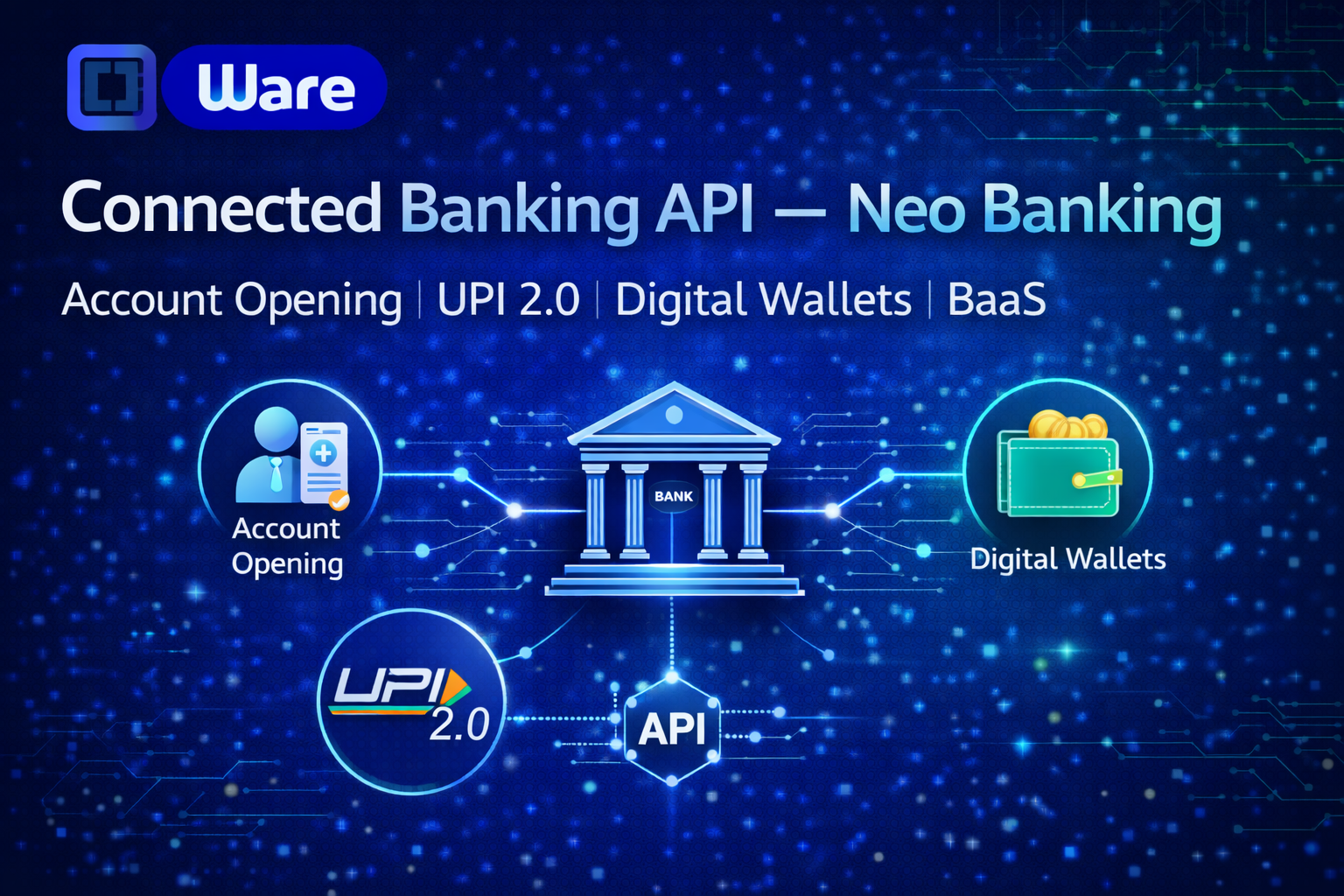
Connected banking payout generally means programmatic initiation and status through bank integrations — often multiple banks — rather than manual CSV uploads to one corporate banking portal. If your roadmap includes connected banking payout API capabilities, this comparison helps stakeholders align.
Single-bank payout
Many companies start with one corporate bank: bulk NEFT files or host-to-host. It works until volume, cut-off times, or redundancy requirements grow. Failure on one rail can delay salaries or merchant settlements.
Connected, API-first payout
API-driven payouts add real-time validation, beneficiary checks, webhook callbacks, and often routing across rails (IMPS vs NEFT) based on amount and urgency. Multi-bank setups reduce concentration risk and improve success rates during peak loads.
What to verify with your provider
- Webhook reliability and idempotency for retries
- Reconciliation files and ERP-friendly exports
- Compliance hooks for regulated entities
Read our Connected Banking Payout API guide for a deeper walkthrough.
Related: Best payout API · BBPS API · AEPS API · Mobile recharge API · Request demo
About This Topic
Payout APIs automate fund disbursements from a business's bank account to any number of recipients via IMPS, NEFT, RTGS, or UPI. NxtBanking's connected-banking Payout API routes each transaction across multiple partner banks for automatic failover, achieving 99%+ success rates. Enterprise clients use it for salary disbursements, vendor payments, insurance claims, loan disbursals, and marketplace payouts — all triggered via REST API with instant webhook callbacks.
Quick Answers
What payment rails are used for payout API transactions?
Payout APIs in India route transactions over IMPS (real-time, up to ₹5 lakh), NEFT (batch-based, any amount), RTGS (real-time, ₹2 lakh+), and UPI (real-time, up to ₹2 lakh for P2M). The optimal rail is selected based on amount, time sensitivity, and bank availability.
What is the typical payout API success rate?
Enterprise-grade payout APIs like NxtBanking's achieve 99%+ transaction success rates through multi-bank connected routing with automatic failover. Single-bank integrations typically achieve 90–95% success due to periodic bank downtime and maintenance windows.
Is NxtBanking RBI-compliant for payment APIs?
Yes. NxtBanking operates through RBI-licensed partner banks for all payment services (IMPS, NEFT, RTGS, UPI) and is NPCI-certified for BBPS, AEPS, and UPI flows. All APIs follow RBI's Master Directions on payment aggregators, KYC, and PMLA obligations. We maintain audit logs, data localisation, and consent frameworks compliant with the DPDP Act 2023.
How does NxtBanking handle API downtime and failover?
NxtBanking uses a connected-banking architecture that links a single API credential to multiple RBI-licensed partner banks. When one bank's rails experience degradation or maintenance, the API automatically routes to the next available bank — with no code change required on the client side. This multi-bank failover is what delivers 99%+ transaction success rates and 99.9% API uptime SLA for enterprise clients.
What does it cost to integrate NxtBanking APIs?
NxtBanking offers pay-as-you-go pricing with no setup fees and no minimum commitment for most APIs. Typical pricing: IMPS/UPI payout ₹3–₹8 per transaction, NEFT ₹1–₹3, BBPS bill payment ₹0.50–₹3, AEPS cash withdrawal ₹2–₹5. Enterprise clients on committed volumes negotiate flat-rate pricing. Sandbox access is free and unlimited. Contact sales for a custom quote based on your expected transaction volume.
NxtBanking is India's AI-powered fintech API platform trusted by hundreds of fintechs, BC networks, NBFCs, and enterprise companies. Our unified API marketplace covers payout (IMPS, NEFT, RTGS, UPI), BBPS bill payment with 20,000+ billers, AEPS biometric banking, KYC and identity verification (Aadhaar, PAN, Bank, Driving Licence, Voter ID, RC), UPI collection and QR codes, domestic money transfer (DMT), mobile and DTH recharge, Micro-ATM, and travel APIs — all under one master agreement, one set of credentials, and one consolidated monthly invoice.
Every NxtBanking API is backed by a 99.9% uptime SLA, real-time webhook delivery, a full-featured sandbox environment with simulated error scenarios, comprehensive API documentation with Postman collections and code samples in multiple languages, and dedicated technical onboarding support. Production go-live for most APIs is achievable within 7–15 business days after KYC and compliance review. For enterprise clients requiring custom SLAs, dedicated infrastructure, or white-label platform builds, NxtBanking offers tailored commercial terms with no minimum volume commitment at the pilot stage.