
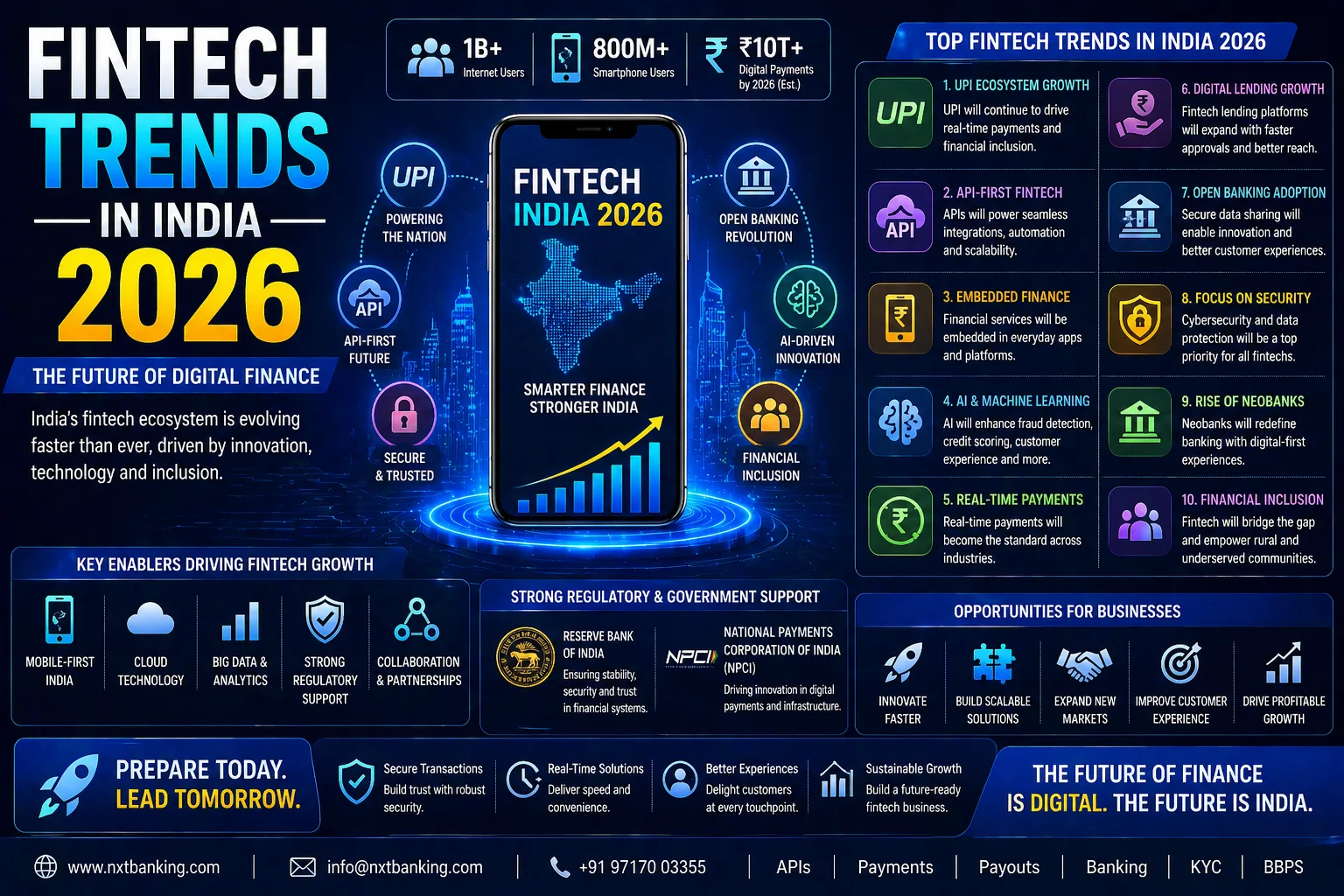
The fintech ecosystem in India is evolving at a rapid pace, driven by digital transformation, API integration, and increasing adoption of real-time payments. Understanding the fintech trends in India 2026 helps businesses and startups stay ahead in a highly competitive landscape.
With advancements in technology and strong regulatory support, India is emerging as a global fintech leader.
API Marketplace
API Marketplace
Current State of Fintech in India
India’s fintech growth is powered by:
- UPI adoption
- mobile-first users
- digital banking
- API-driven infrastructure
- fintech startups
These systems are supported by National Payments Corporation of India.
Top Fintech Trends in India 2026
Growth of UPI Ecosystem
UPI continues to dominate digital payments due to:
- instant transactions
- ease of use
- wide adoption
Rise of API-First Fintech
APIs are becoming the backbone of fintech.
They enable:
- faster integrations
- automation
- scalability
Build Payment System Using API
Embedded Finance
Financial services are being integrated into non-financial platforms.
Examples:
- in-app payments
- lending in e-commerce
- insurance in apps
AI and Machine Learning in Fintech
AI is transforming:
- fraud detection
- credit scoring
- customer support
Real-Time Payments Expansion
Instant payments are becoming the standard across industries.
Real Time Payment Apis Explained
Digital Lending Growth
Fintech platforms are expanding loan services with faster approvals.
Open Banking Adoption
Banks are sharing data securely through APIs to enable innovation.
Increased Focus on Security
Cybersecurity is becoming a top priority in fintech.
Growth of Neobanks
Digital-only banks are gaining popularity.
Financial Inclusion
Fintech is reaching rural and underserved populations.
Role of Government and Regulations
Fintech in India is regulated by:
- Reserve Bank of India
- National Payments Corporation of India
These bodies ensure:
- secure transactions
- compliance
- innovation
Opportunities for Businesses
Businesses can leverage fintech trends in India 2026 by:
- building API-based platforms
- offering real-time payments
- automating financial workflows
- expanding digital services
Challenges in Fintech
Regulatory Compliance
Strict financial rules must be followed.
Cybersecurity Risks
Increasing digital transactions raise security concerns.
Competition
Fintech market is highly competitive.
Technology Complexity
Requires advanced infrastructure.
Future Technologies in Fintech
Blockchain
May improve transparency and security.
Biometric Authentication
Enhances user verification.
Voice Payments
Allows hands-free transactions.
IoT Payments
Connected devices making payments automatically.
What Startups Should Focus On
API Integration
Build scalable systems using APIs.
User Experience
Provide simple and fast interfaces.
Security
Protect user data and transactions.
Scalability
Prepare for growth.
Top Fintech Apis Startups
Payment API Security Best Practices
Conclusion
The fintech trends in India 2026 highlight a future driven by technology, speed, and accessibility. With API-based systems, real-time payments, and AI-driven solutions, fintech is reshaping the financial landscape.
Businesses that adapt to these trends can unlock new opportunities and stay competitive in the evolving digital economy.