
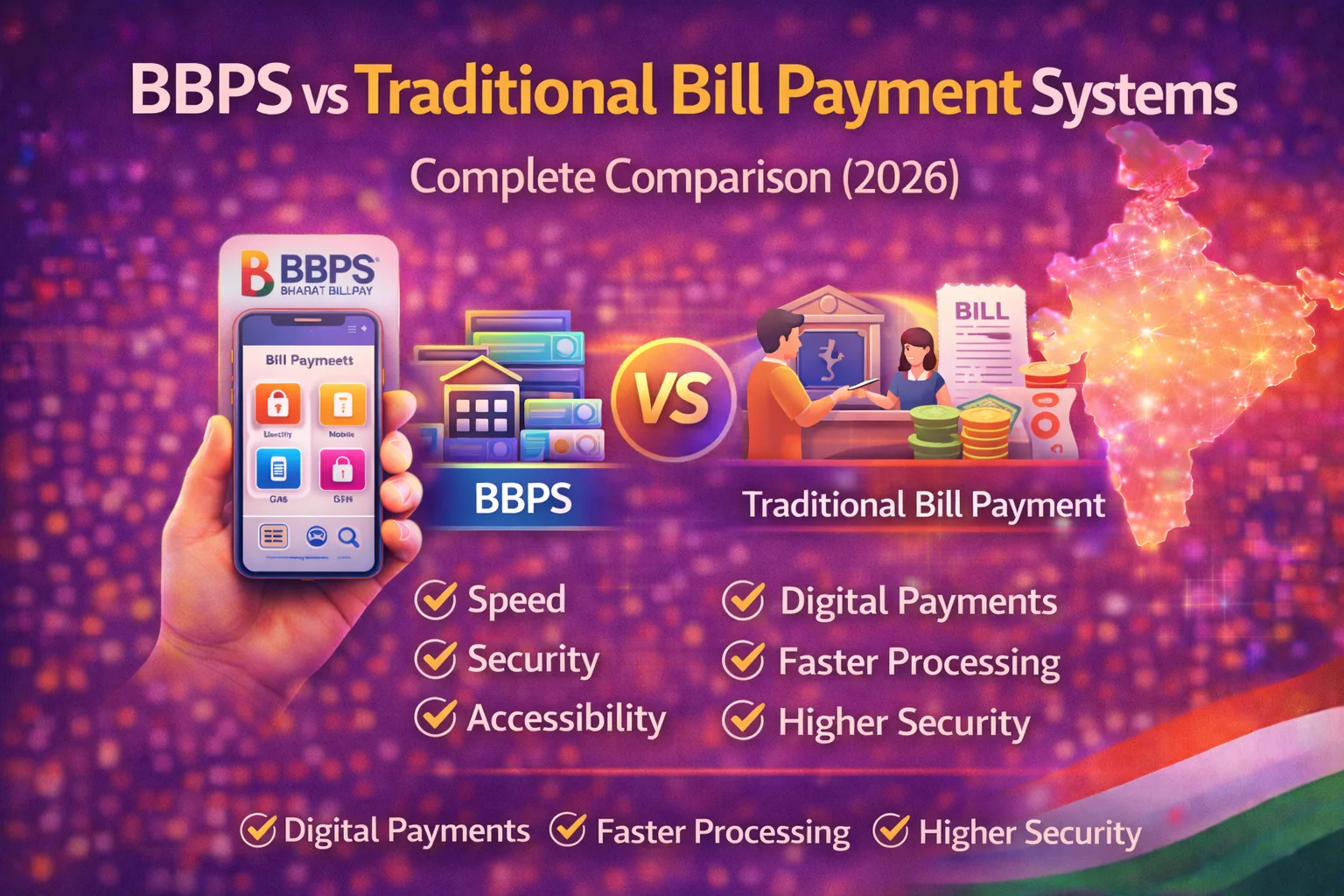
The comparison between BBPS vs traditional bill payment systems is essential for understanding how digital payments are transforming the financial ecosystem in India.
Traditional bill payment methods have been used for decades, but with the introduction of BBPS, the process has become faster, more secure, and more efficient.
Businesses and customers are now shifting toward BBPS due to its standardized and digital-first approach.
What is BBPS
BBPS (Bharat Bill Payment System) is a centralized bill payment platform that allows users to pay multiple bills through a single system.
It is operated by National Payments Corporation of India and ensures secure, real-time, and standardized transactions.
What are Traditional Bill Payment Systems
Traditional bill payment systems refer to older methods such as:
- Visiting payment centers
- Paying bills at bank branches
- Manual cash payments
- Cheque-based transactions
These systems are usually offline and time-consuming.
Key Differences: BBPS vs Traditional Bill Payment Systems
Payment Method
BBPS offers digital payments through apps, websites, and agents, while traditional systems rely heavily on physical visits and cash payments.
Speed
BBPS provides instant payment confirmation, whereas traditional systems may take hours or even days to process payments.
Accessibility
BBPS is accessible online and through retail agents across India, while traditional systems require visiting specific locations.
Security
BBPS is regulated and encrypted, offering higher security. Traditional systems have higher risks due to manual handling and lack of standardization.
Transparency
BBPS provides real-time tracking and receipts. Traditional systems often lack proper tracking and updates.
Integration Capability
BBPS can be integrated into fintech platforms using APIs. Traditional systems do not support API-based integration.
Advantages of BBPS Over Traditional Systems
Faster Transactions
Payments are processed instantly with confirmation.
Better Customer Experience
Users can pay bills anytime without visiting physical locations.
Centralized Platform
Multiple billers can be accessed through one system.
Secure and Regulated
BBPS ensures compliance and reduces fraud risk.
Business Opportunities
Fintech companies can integrate BBPS and earn commissions.
Internal Links:
API Marketplace
API Marketplace
Limitations of Traditional Systems
Time Consuming
Manual processes take longer and require physical effort.
Limited Availability
Services are restricted to specific locations and timings.
Higher Operational Cost
Requires infrastructure, staff, and physical presence.
Error-Prone
Manual handling increases chances of errors and delays.
Why Businesses Prefer BBPS
The shift from BBPS vs traditional bill payment systems clearly shows why businesses are adopting BBPS:
- Scalable solution
- Low operational cost
- High efficiency
- Better revenue opportunities
Real-World Use Cases
BBPS is widely used by:
- Fintech platforms
- Retail payment centers
- Mobile recharge businesses
- Digital wallets
Future of Bill Payments in India
The future clearly favors BBPS due to:
- Digital transformation
- Government support
- Increasing smartphone usage
- Growth in fintech ecosystem
Traditional systems are gradually becoming obsolete.
FAQs
What is the difference between BBPS and traditional payment systems
BBPS is digital, fast, and centralized, while traditional systems are manual and slower.
Is BBPS safer than traditional methods
Yes, BBPS is more secure due to encryption and regulatory oversight.
Why is BBPS replacing traditional systems
Because it is faster, more efficient, and easier to use.
Conclusion
The comparison of BBPS vs traditional bill payment systems highlights a clear shift toward digital solutions.
BBPS offers speed, security, and scalability, making it the preferred choice for both businesses and customers in 2026.
Businesses that adopt BBPS early can gain a competitive advantage in the growing fintech ecosystem.