
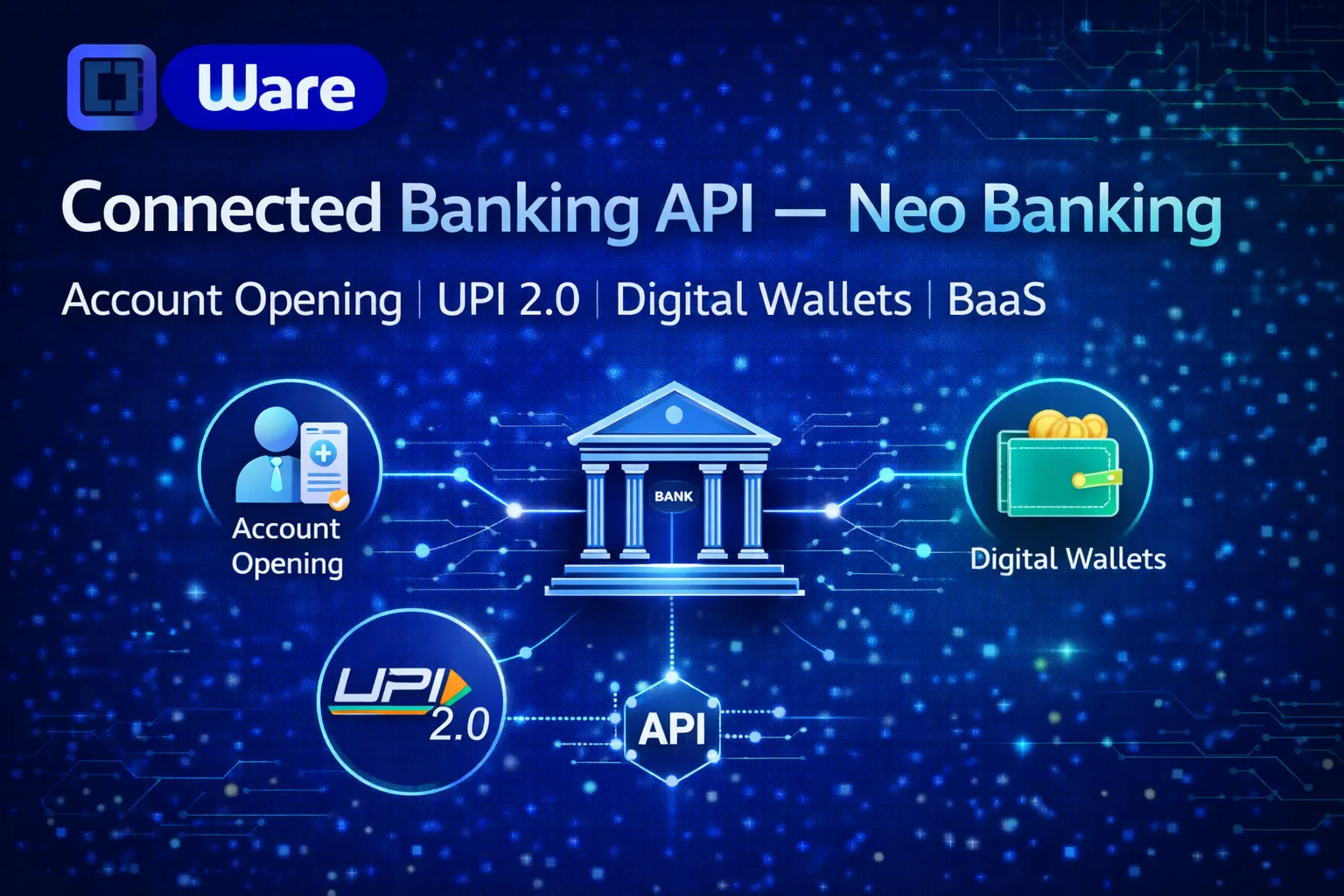
What is Connected Banking?
Connected banking is a modern financial infrastructure model where businesses integrate directly with bank core systems through APIs, bypassing traditional payment aggregators and intermediaries. In India, this model has gained massive traction since 2023 as RBI’s fintech-friendly regulations opened doors for direct bank partnerships.
Unlike traditional payment gateways that act as middlemen between your business and the bank, connected banking creates a direct pipeline. Your application talks to the bank’s core banking system (CBS) through secure APIs, enabling real-time fund transfers, account validation, and reconciliation.
Why Indian Enterprises Are Adopting Connected Banking
India processes over 12 billion digital transactions monthly through UPI alone. For enterprises handling high-volume payouts — salary disbursements, vendor payments, insurance claims, loan disbursals — every rupee saved on transaction fees adds up to crores annually.
Cost Advantage
Traditional payment aggregators charge 0.5% to 2% per transaction. Connected banking reduces this to a flat fee (often under ₹2 per transaction) regardless of amount. For an enterprise processing ₹100 crore monthly, this translates to savings of ₹50 lakh to ₹2 crore per month.
Speed & Reliability
Direct bank connections eliminate aggregator queues. IMPS payouts settle in under 30 seconds, NEFT in under 2 hours, and RTGS in real-time for amounts above ₹2 lakh. Success rates exceed 99.5% compared to 95–97% through aggregators.
Compliance & Control
Connected banking gives enterprises full visibility into every transaction. Real-time webhooks, detailed audit trails, and direct bank confirmations satisfy RBI compliance requirements and internal audit needs.
How Connected Banking Works: Technical Overview
The architecture involves three layers:
- API Layer: RESTful APIs with OAuth 2.0 authentication that your systems call to initiate transfers, check balances, and retrieve statements.
- Bank Integration Layer: Secure connections to partner banks using ISO 8583/20022 messaging standards, typically over VPN or MPLS circuits.
- Orchestration Layer: Intelligent routing that selects the optimal bank and transfer mode (IMPS/NEFT/RTGS/UPI) based on amount, urgency, and bank availability.
Connected Banking vs Payment Gateway: Key Differences
Feature
Connected Banking
Payment Gateway
Integration Type
Direct Bank API
Aggregator Middleware
Transaction Cost
Flat ₹1-3 per txn
0.5%-2% per txn
Settlement Speed
Real-time to T+0
T+1 to T+3
Success Rate
99.5%+
95-97%
Customization
Full control
Limited by aggregator
Compliance
Direct bank audit trail
Aggregator-dependent
RBI Regulations Supporting Connected Banking
The Reserve Bank of India has been actively promoting direct digital payment infrastructure:
- PA/PG Guidelines (2020): Clarified the role of payment aggregators, opening space for direct integrations.
- Account Aggregator Framework: Enables consent-based data sharing between financial institutions.
- PIDF Scheme: Payment Infrastructure Development Fund supports digital payment adoption in tier-3+ cities.
- Digital Lending Guidelines (2022): Mandated direct bank disbursals, boosting connected banking adoption.
Use Cases for Connected Banking in India
1. Fintech & NBFC Payouts
Loan disbursals, cashback, and refunds processed instantly to customer bank accounts.
2. E-commerce Vendor Settlements
Marketplace platforms settling with thousands of sellers daily, needing fast and cheap bulk transfers.
3. Insurance Claims
Real-time claim settlements improving customer satisfaction and reducing processing costs.
4. Salary & Payroll
Enterprises with 10,000+ employees needing guaranteed same-day salary credits.
Getting Started with Connected Banking via NxtBanking
NxtBanking provides enterprise-grade connected banking infrastructure with multi-bank partnerships. Our API supports IMPS, NEFT, RTGS, and UPI payouts with a single integration point.
Frequently Asked Questions
What is connected banking in simple terms?
Connected banking is direct integration between your business application and bank systems via APIs, eliminating middlemen for faster, cheaper transactions.
Is connected banking regulated by RBI?
Yes. Connected banking operates under RBI’s payment system guidelines, and all participating banks and fintech providers must comply with KYC, AML, and data protection norms.
How much does connected banking cost?
Typically ₹1-3 per transaction flat fee, regardless of transfer amount. This is significantly cheaper than percentage-based payment gateway charges.
Can small businesses use connected banking?
Yes. While connected banking was initially enterprise-focused, platforms like NxtBanking now offer scalable solutions starting from SME-level volumes.
Read the complete guide: Connected Banking Payout API Guide