
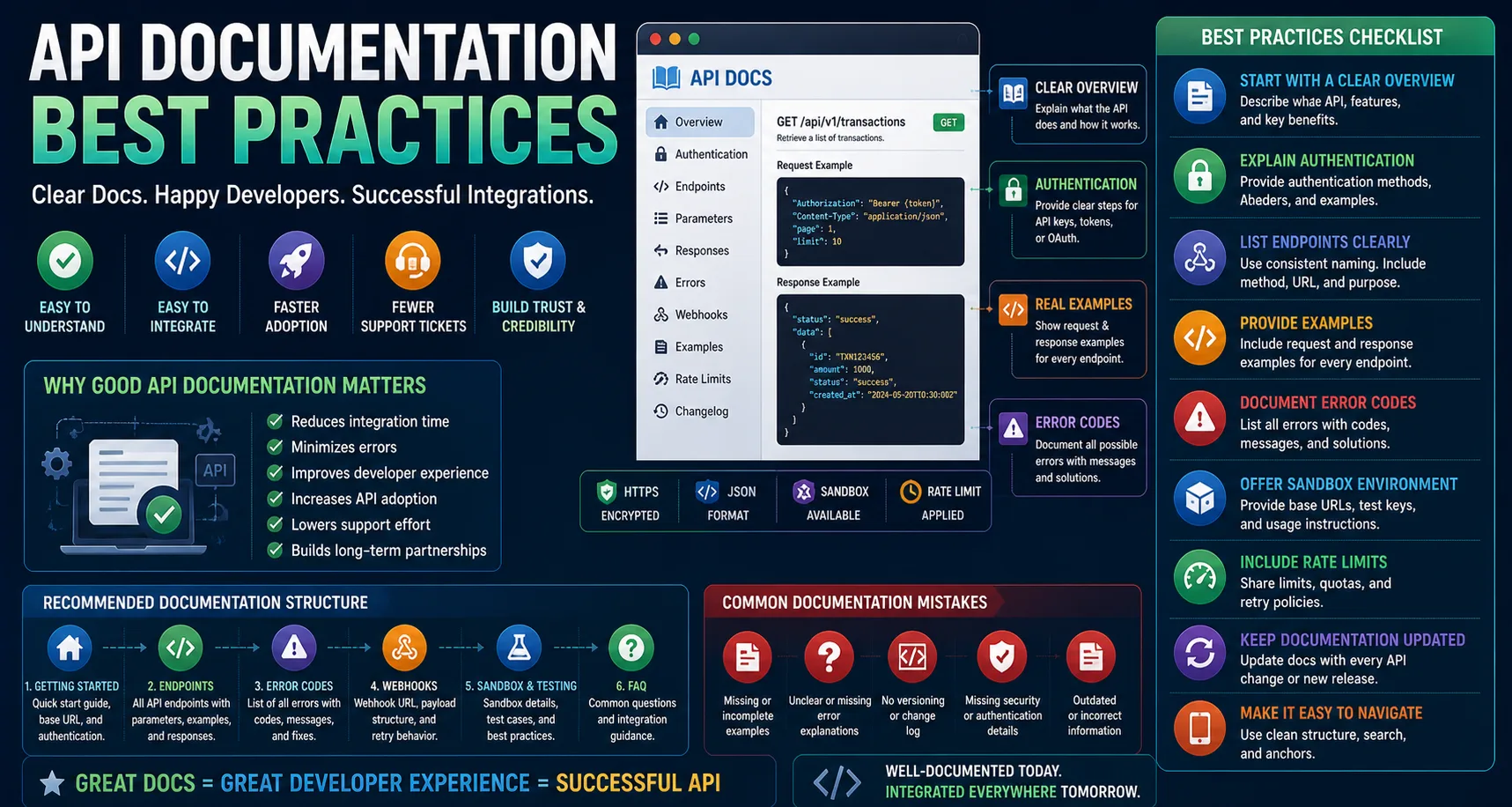
Understanding API documentation best practices is essential for building developer-friendly APIs. Good API documentation helps developers understand how to integrate, test, and use APIs without confusion.
For fintech, banking, and digital platforms, clear documentation reduces integration errors, improves developer experience, and speeds up product adoption.
What is API Documentation
API documentation is a guide that explains how an API works. It includes endpoints, authentication methods, request formats, response examples, error codes, and integration instructions.
Why API Documentation is Important
Good API documentation helps businesses:
- Reduce developer support requests
- Improve API adoption
- Avoid integration mistakes
- Build trust with partners
- Speed up onboarding
developer.mozilla.org
swagger.io
API Documentation Best Practices
Start with a Clear Overview
Explain what the API does, who it is for, and what problems it solves.
Provide Authentication Details
Clearly explain:
- API keys
- Bearer tokens
- OAuth
- Required headers
List All Endpoints Clearly
Each endpoint should include:
- Endpoint URL
- HTTP method
- Purpose
- Required parameters
- Optional parameters
Add Request and Response Examples
Provide practical examples in JSON or XML so developers can understand the expected format.
Explain Error Codes
Include common errors such as:
- 400 Bad Request
- 401 Unauthorized
- 403 Forbidden
- 404 Not Found
- 500 Internal Server Error
Include Sandbox Details
Provide test credentials, sandbox URLs, and testing instructions.
Add Rate Limit Information
Explain request limits, timeout rules, and retry policies.
Keep Documentation Updated
Update documentation whenever endpoints, parameters, or authentication rules change.
API Documentation for Fintech APIs
Fintech APIs require extra clarity because they handle sensitive transactions.
Important sections include:
- Transaction flow
- Status codes
- Callback handling
- Reconciliation process
- Security guidelines
API Marketplace
API Marketplace
API Marketplace
Common API Documentation Mistakes
Missing Examples
Without examples, developers may misunderstand request formats.
Unclear Error Messages
Poor error documentation makes debugging difficult.
No Versioning Details
Developers need to know which API version they are using.
No Security Instructions
API keys and tokens must be handled securely.
Best Structure for API Documentation
Getting Started
Explain setup, authentication, and first API call.
Endpoints
List all endpoints with request and response details.
Error Codes
Explain all possible error responses.
Webhooks
Describe callback URLs, payloads, and retry behavior.
Conclusion
Following API documentation best practices helps businesses create APIs that developers can understand and integrate easily. Clear documentation improves adoption, reduces errors, and builds trust.
For fintech businesses, strong API documentation is especially important because it supports secure transactions, faster integrations, and better partner onboarding.