
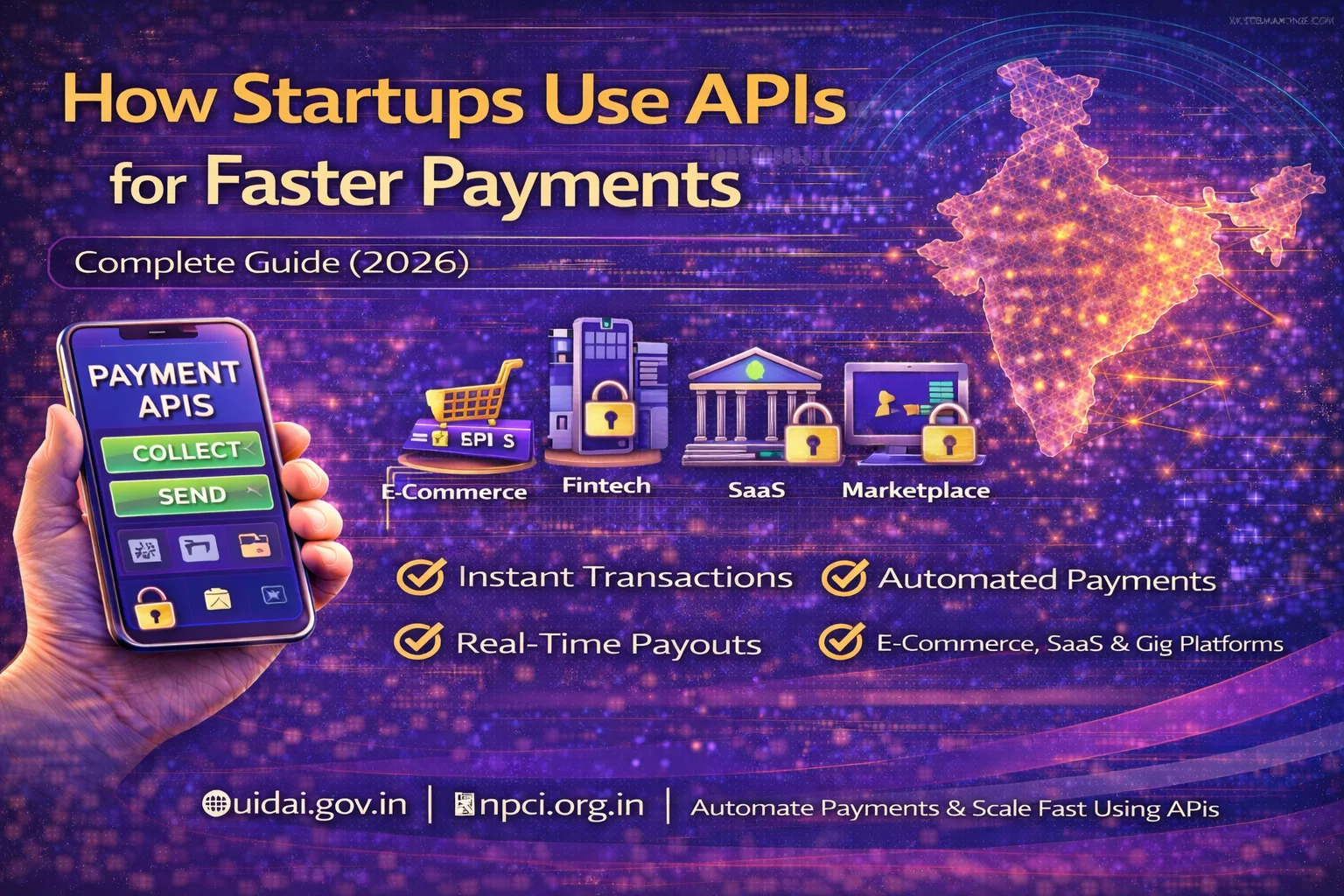
Startups operate in fast-moving environments where speed, efficiency, and automation are critical. Understanding how startups use APIs for faster payments helps businesses streamline financial operations, reduce manual work, and deliver better customer experiences.
In India, startups are leveraging API-based payment systems to enable instant transactions, automate workflows, and scale operations quickly. By using APIs, startups can integrate payment solutions without building complex financial infrastructure from scratch.
API Marketplace
API Marketplace
What Does It Mean for Startups to Use Payment APIs
When startups use APIs for payments, they connect their applications directly with banking and fintech systems to:
- Accept payments
- Send payouts
- Automate refunds
- Verify users and accounts
- Track transactions in real time
This allows startups to operate efficiently without manual intervention.
Why Startups Prefer APIs for Payments
Faster Time to Market
APIs allow startups to launch payment features quickly.
Low Development Cost
No need to build complex payment infrastructure.
Easy Integration
Developer-friendly APIs simplify implementation.
Scalability
Handles increasing transaction volume as the business grows.
Automation
Reduces manual processing and errors.
Types of Payment APIs Used by Startups
Payment Gateway APIs
Used to collect payments from customers.
Payout APIs
Used to send money to vendors, partners, and users.
Real-Time Payment APIs
Enable instant fund transfers.
Verification APIs
Used for KYC, bank verification, and fraud checks.
Subscription APIs
Used for recurring billing and SaaS payments.
How Startups Use APIs for Faster Payments
Instant Payment Collection
Startups integrate payment gateways to accept:
- UPI payments
- Cards
- Wallets
- Net banking
Payments are processed instantly, improving conversion rates.
Automated Payouts
Startups use payout APIs to:
- Pay vendors
- Disburse salaries
- Process refunds
- Send commissions
This eliminates manual bank transfers.
Real-Time Transactions
Using systems powered by National Payments Corporation of India, startups enable:
- Instant transfers
- Immediate confirmation
- Faster settlement
Seamless User Experience
APIs allow startups to create smooth payment flows:
- Quick checkout
- Instant confirmation
- Transparent tracking
Automated Reconciliation
Payment APIs provide reports that help startups:
- Track transactions
- Match settlements
- Identify failures
Use Cases of APIs in Startup Payments
E-Commerce Startups
Accept payments and process refunds instantly.
Fintech Startups
Enable digital wallets, lending, and money transfer services.
SaaS Platforms
Automate subscription billing and recurring payments.
Marketplace Platforms
Handle buyer payments and seller payouts.
Gig Economy Platforms
Pay freelancers and service providers instantly.
API Marketplace
Payment Gateway Vs Payout API
Benefits of Using APIs for Faster Payments
Speed
Instant payment processing.
Efficiency
Reduced manual workload.
Accuracy
Fewer errors in transactions.
Cost Savings
Lower operational expenses.
Better Customer Experience
Faster and smoother transactions.
Challenges Startups Face
Integration Complexity
Requires backend development.
API Downtime
Provider reliability impacts performance.
Compliance Requirements
Must follow financial regulations.
Security Risks
Need strong encryption and authentication.
Best Practices for Startups
Choose Reliable API Providers
Focus on uptime and success rate.
Use Sandbox Testing
Test integrations before going live.
Implement Security Measures
Use encryption, authentication, and monitoring.
Track Transactions in Real Time
Ensure visibility and control.
Plan for Scalability
Choose APIs that support growth.
Payment API Security Best Practices
Real Time Payment Apis Explained
Future of APIs in Startup Payments
The future of how startups use APIs for faster payments includes:
- AI-driven payment automation
- Embedded finance
- Real-time global payments
- Advanced fraud detection
- API-first financial ecosystems
FAQs
How do startups use APIs for payments
They use APIs to collect payments, send payouts, and automate financial workflows.
Why are APIs important for startups
They enable faster development, automation, and scalability.
Are payment APIs secure
Yes, when implemented with proper security measures.
Can small startups use payment APIs
Yes, APIs are designed to be accessible for startups of all sizes.
Conclusion
Understanding how startups use APIs for faster payments helps businesses build efficient, scalable, and modern payment systems. APIs enable instant transactions, automation, and better user experience, making them essential for startup growth.
Startups that adopt API-driven payment systems can move faster, reduce costs, and compete effectively in the digital economy.