
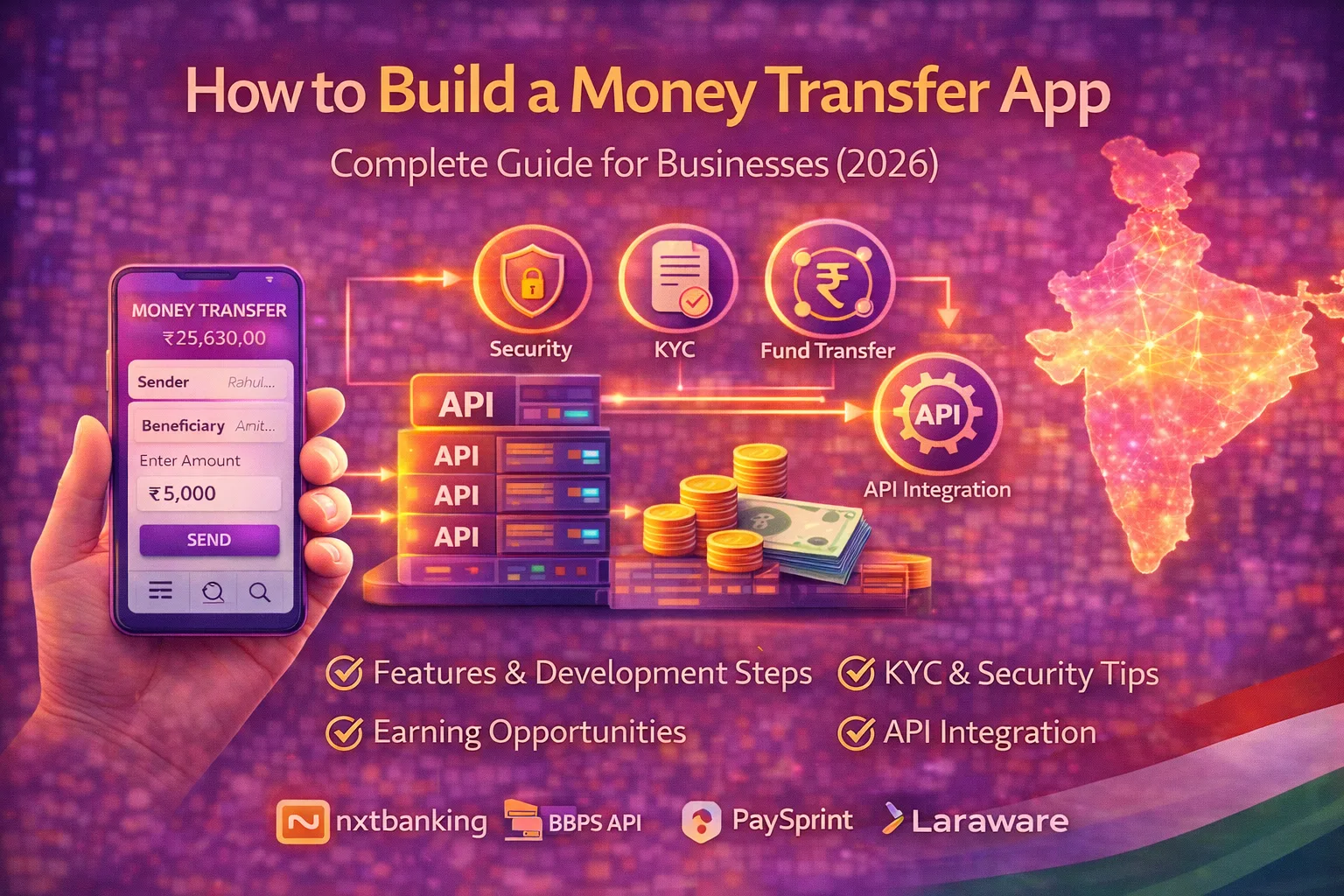
If you want to enter the fintech market, learning how to build a money transfer app is one of the smartest business decisions you can make. Money transfer apps have become essential for users who want fast, secure, and convenient ways to send funds digitally.
In India, the rapid growth of digital payments has created strong demand for domestic money transfer solutions. Businesses that build a money transfer app can serve individuals, retailers, and merchants while creating a scalable and recurring revenue model.
Inbound Link:
API Marketplace
What is a Money Transfer App
A money transfer app is a digital platform that allows users to send money from one account to another using secure payment infrastructure. Depending on the business model, the app may support:
- Bank account transfers
- Domestic money transfer services
- Beneficiary management
- Transaction history
- Real-time payment tracking
A money transfer app can be built for direct users, agents, retailers, or distributors.
Why Businesses Want to Build a Money Transfer App
Growing Digital Payment Demand
Consumers now expect quick and reliable digital payment options.
Scalable Business Model
A money transfer app can start with basic transfer features and later expand into AEPS, BBPS, recharge, payouts, and other fintech services.
Recurring Revenue Opportunity
Businesses can earn commission or service fees on every successful transaction.
Better Customer Retention
Once users start using a money transfer app regularly, they are more likely to return for future transactions.
Inbound Links:
API Marketplace
API Marketplace
Types of Money Transfer Apps
Consumer Money Transfer App
Designed for direct customers who want to send money digitally.
Retailer or Agent-Based Money Transfer App
Built for shops, retailers, or service providers who send money on behalf of customers.
Fintech Platform
A larger app that combines money transfer with other services such as bill payments, AEPS, and recharge.
White-Label Money Transfer App
A branded solution built using API infrastructure and offered under your own business name.
Core Features Required to Build a Money Transfer App
User Registration and Login
Your app should allow secure onboarding using mobile number, OTP, email, or password-based login.
KYC Verification
User verification is essential for compliance and transaction limits.
Sender Registration
For DMT-based systems, sender onboarding is usually required before transfer.
Beneficiary Management
Users should be able to add, verify, update, and manage beneficiary bank accounts.
Fund Transfer
This is the core feature where the user selects beneficiary, enters amount, and initiates transfer.
Transaction Status Tracking
Users must be able to check whether the transaction is successful, failed, pending, or reversed.
Transaction History
The app should show all previous transfers, timestamps, amounts, and status.
Notifications and Alerts
Users should receive instant alerts for transfer success, failure, pending status, and account updates.
Admin Dashboard
A backend dashboard should help you manage users, transactions, settlements, support tickets, logs, and commissions.
Technology Stack to Build a Money Transfer App
Frontend Development
You can use:
- Flutter
- React Native
- Kotlin
- Swift
Backend Development
Suitable backend stacks include:
- Node.js
- Laravel
- Python
- Java
Database
You can use:
- MySQL
- PostgreSQL
- MongoDB
Cloud Infrastructure
Use secure cloud hosting for better performance and uptime:
- AWS
- Google Cloud
- DigitalOcean
APIs Needed to Build a Money Transfer App
To build a money transfer app, API integration is the foundation of the system. Common APIs include:
DMT API
Enables sender registration, beneficiary management, and fund transfers.
Inbound Link:
API Marketplace
Account Verification API
Used to verify bank account details before transfer.
OTP or Authentication API
Secures registration and login flow.
Transaction Status API
Tracks final payment outcome and updates the app accordingly.
Callback or Webhook Integration
Used to receive real-time transaction updates from the provider.
Step-by-Step Process to Build a Money Transfer App
Step 1: Define the Business Model
Decide whether the app is for direct consumers, agents, retailers, or white-label partners. This affects your feature set, design, and monetization strategy.
Step 2: Choose a Reliable API Provider
Select a provider that offers:
- Strong uptime
- Secure APIs
- Detailed documentation
- Fast settlement
- Sandbox testing
- Good support
Inbound Link:
Contact us
Step 3: Plan the App Flow
Map the journey clearly:
- User signup
- KYC
- Sender registration
- Beneficiary addition
- Account verification
- Money transfer
- Status update
- Receipt generation
Step 4: Design the UI and User Experience
The interface should be simple and trust-building. Important screens include:
- Login/signup
- Dashboard
- Add beneficiary
- Transfer money
- Transaction history
- Support page
A clean and fast user experience improves retention.
Step 5: Build the Backend Architecture
The backend should manage:
- User accounts
- KYC records
- API authentication
- Beneficiary records
- Transfer requests
- Logs and reconciliation
- Callback handling
- Admin controls
This is one of the most critical steps when you build a money transfer app.
Step 6: Integrate DMT API
Now connect the app with money transfer APIs. Typical functions include:
- Sender registration
- Beneficiary addition
- Beneficiary verification
- Transfer request
- Transaction status check
- Callback response handling
Make sure all request and response mappings are tested carefully.
Inbound Link:
API Marketplace
Step 7: Add Security Layers
Because a money transfer app handles sensitive financial data, security must be strong.
Important measures include:
- HTTPS encryption
- Token-based authentication
- Secure credential storage
- Server-side validation
- Activity logging
- Role-based access control
Outbound Links:
NPCI
Reserve Bank of India
Step 8: Test the App Thoroughly
Before going live, test all major scenarios:
- New user registration
- OTP validation
- KYC flow
- Beneficiary creation
- Invalid account details
- Successful transfer
- Failed transfer
- Pending transfer
- Callback updates
- Duplicate request prevention
Testing is essential if you want to build a money transfer app that users can trust.
Step 9: Launch the App
After successful testing, deploy the production version with live credentials.
At launch, make sure:
- All APIs are live
- Logs are active
- Support team is ready
- Settlement process is being tracked
- Admin dashboard is functional
Step 10: Monitor and Improve
After launch, continuously monitor:
- Success rate
- Failed transactions
- Support issues
- User behavior
- Retention rate
- Revenue reports
A money transfer app should evolve based on usage and business goals.
Security Best Practices
Use Secure Authentication
OTP, token-based login, and session controls are important.
Protect Sensitive Data
Do not expose credentials or sensitive account information in frontend code.
Validate Every Request
Check amount limits, beneficiary details, sender status, and account formats before processing.
Maintain Audit Logs
Store detailed logs for every transfer request, callback, and status change.
Prevent Duplicate Transfers
Use unique transaction IDs and idempotent request logic where possible.
Compliance Considerations
When you build a money transfer app, you must plan for:
- KYC verification
- User identity checks
- Audit logs
- Transaction monitoring
- Reporting and reconciliation
These requirements help maintain trust and regulatory alignment.
Common Challenges While Building a Money Transfer App
API Downtime
Provider outages can affect transaction flow.
Pending Transactions
Some transfers may not receive immediate final confirmation.
Beneficiary Validation Errors
Incorrect account number or IFSC can block transfers.
Callback Failures
If webhook handling is weak, the final status may not sync.
Security Risks
Poor access control or weak validation can create risk.
Revenue Model of a Money Transfer App
A business that chooses to build a money transfer app can earn through:
Transaction Commission
Earn per successful money transfer.
Service Fees
Charge customers convenience or platform fees where applicable.
Distributor or Retailer Model
Earn through agent or retailer transaction volume.
Cross-Selling Fintech Services
After building user traffic, you can offer:
- BBPS
- AEPS
- Recharge
- Insurance
- Payouts
Who Should Build a Money Transfer App
This business model is suitable for:
- Fintech startups
- Retail service providers
- Payment solution companies
- Distributor networks
- Digital wallet platforms
- API-based fintech businesses
FAQs
How long does it take to build a money transfer app
The timeline depends on the complexity, features, API documentation, and testing. A basic version can be launched in a few weeks, while a larger platform may take longer.
What API is required to build a money transfer app
A DMT API is usually the core requirement, along with account verification, authentication, and transaction status APIs.
Is it profitable to build a money transfer app
Yes, if you have a strong business model, reliable API provider, and recurring transaction volume, it can become a profitable fintech service.
Can I add more services after launch
Yes, you can expand the app by adding AEPS, BBPS, recharge, and other financial services later.
Conclusion
If you want to enter digital finance, learning how to build a money transfer app is a strong step toward creating a scalable fintech product. A well-built app can offer fast money transfer services, improve customer retention, and generate recurring revenue.
The key to success is choosing the right API provider, building a secure architecture, designing a simple user journey, and testing every transfer flow carefully. With the right approach, a money transfer app can become a strong digital business in 2026 and beyond.
Inbound Link:
API Marketplace