
Understanding the difference between IMPS vs NEFT vs RTGS vs DMT is essential for businesses and individuals dealing with digital payments.
With the rapid growth of fintech in India, multiple money transfer methods are available, each with its own advantages, limitations, and use cases.
This guide provides a complete comparison of IMPS vs NEFT vs RTGS vs DMT to help you choose the right transfer method.
What is IMPS
IMPS (Immediate Payment Service) is a real-time interbank electronic fund transfer system.
- Instant transfer
- Available 24/7
- Suitable for small to medium transactions
It is managed by National Payments Corporation of India.
Outbound Link:
NPCI
What is NEFT
NEFT (National Electronic Funds Transfer) is a bank-to-bank transfer system that works in batches.
- Available 24/7
- Slight delay due to batch processing
- Suitable for general transfers
https://www.rbi.org.in/Scripts/FAQView.aspx?Id=60
What is RTGS
RTGS (Real-Time Gross Settlement) is used for high-value transactions.
- Real-time processing
- High minimum amount
- Used for large transfers
Outbound Link:
Reserve Bank of India
What is DMT
DMT (Domestic Money Transfer) is an API-based system that allows businesses to offer money transfer services using IMPS, NEFT, and RTGS.
- Used by fintech platforms
- Supports agent-based transfers
- Enables instant customer services
Key Differences: IMPS vs NEFT vs RTGS vs DMT
Speed
- IMPS: Instant
- NEFT: Batch-based (slight delay)
- RTGS: Real-time
- DMT: Depends on IMPS/NEFT/RTGS
Availability
- IMPS: 24/7
- NEFT: 24/7 (processed in batches)
- RTGS: 24/7 (for most banks)
- DMT: 24/7 (depends on API provider)
Transaction Limit
- IMPS: Up to ₹5 lakh (varies by bank)
- NEFT: No minimum or maximum limit
- RTGS: Minimum ₹2 lakh
- DMT: Depends on provider and KYC
Use Case
- IMPS: Instant transfers
- NEFT: Regular payments
- RTGS: Large transactions
- DMT: Business/retail money transfer
Users
- IMPS: Individuals and businesses
- NEFT: Individuals and businesses
- RTGS: Businesses and high-value users
- DMT: Fintech platforms, agents, retailers
Detailed Comparison Table
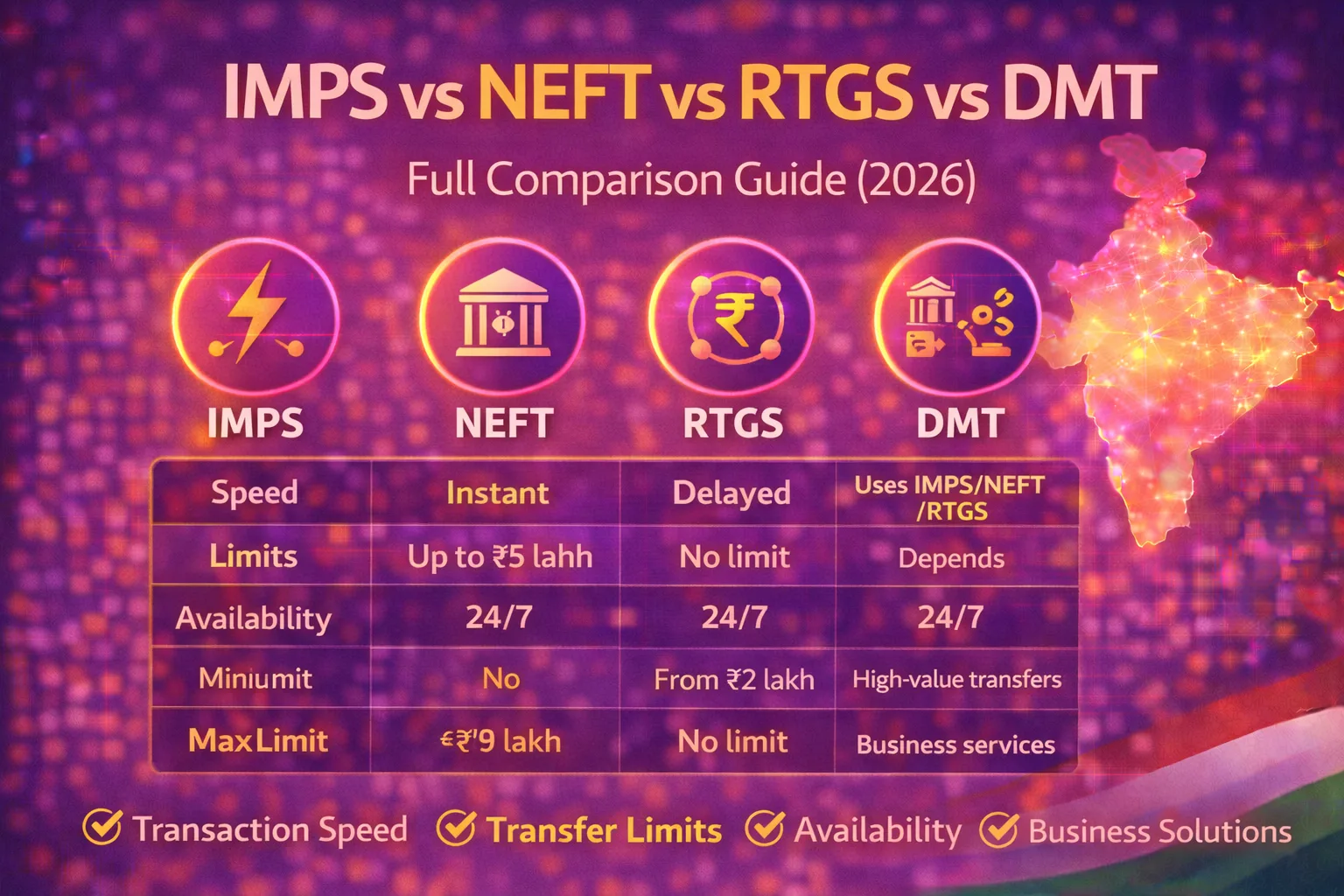
FeatureIMPSNEFTRTGSDMTSpeedInstantDelayed (batch)Real-timeDepends on methodAvailability24/724/724/724/7Min LimitNoNo₹2 lakhDependsMax Limit~₹5 lakhNo limitNo limitDependsBest ForQuick transfersRegular paymentsHigh-value transfersBusiness servicesIntegrationBanking appsBanking appsBanking appsAPI-based
Advantages of Each Method
IMPS
- Instant transfer
- Available anytime
- Easy to use
NEFT
- No transaction limit
- Reliable for regular transfers
RTGS
- Ideal for large transactions
- Immediate settlement
DMT
- Enables business services
- Supports agent-based model
- Generates revenue through commissions
Inbound Links:
API Marketplace
API Marketplace
When to Use Each Method
IMPS
- You need instant transfer
- Amount is small or medium
NEFT When
- You are not in a hurry
- You want a cost-effective option
RTGS When
- You are transferring large amounts
- You need immediate settlement
DMT When
- You run a fintech or retail business
- You want to offer money transfer services
- You want to earn commissions
Business Perspective: Why DMT is Important
From a business point of view, IMPS vs NEFT vs RTGS vs DMT shows that DMT is not just a payment method but a service layer.
DMT allows businesses to:
- Offer multiple transfer methods
- Earn commission on transactions
- Build fintech platforms
- Serve customers without direct banking access
Challenges and Considerations
IMPS
- Transaction limit restrictions
NEFT
- Slight delay in processing
RTGS
- High minimum transfer amount
DMT
- Requires API integration
- Needs compliance and KYC
Future of Money Transfer Systems
The future of IMPS vs NEFT vs RTGS vs DMT lies in:
- Faster transactions
- API-based integrations
- Fintech-driven services
- Increased automation
DMT is expected to grow rapidly as more businesses adopt API-based financial services.
FAQs
What is the main difference between IMPS, NEFT, RTGS, and DMT
IMPS, NEFT, and RTGS are banking systems, while DMT is a service layer built on top of these systems.
Which is the fastest transfer method
IMPS and RTGS provide real-time transfers.
Is DMT better than IMPS
DMT is not a replacement; it uses IMPS, NEFT, and RTGS to provide services.
Which method is best for businesses
DMT is best for businesses because it allows offering money transfer services and earning commissions.
Conclusion
The comparison of IMPS vs NEFT vs RTGS vs DMT clearly shows that each system serves a different purpose.
While IMPS, NEFT, and RTGS are core banking systems, DMT acts as a bridge that enables businesses to deliver these services to customers.
Choosing the right method depends on your needs, whether it is speed, amount, or business use case.
Inbound Link:
API Marketplace