
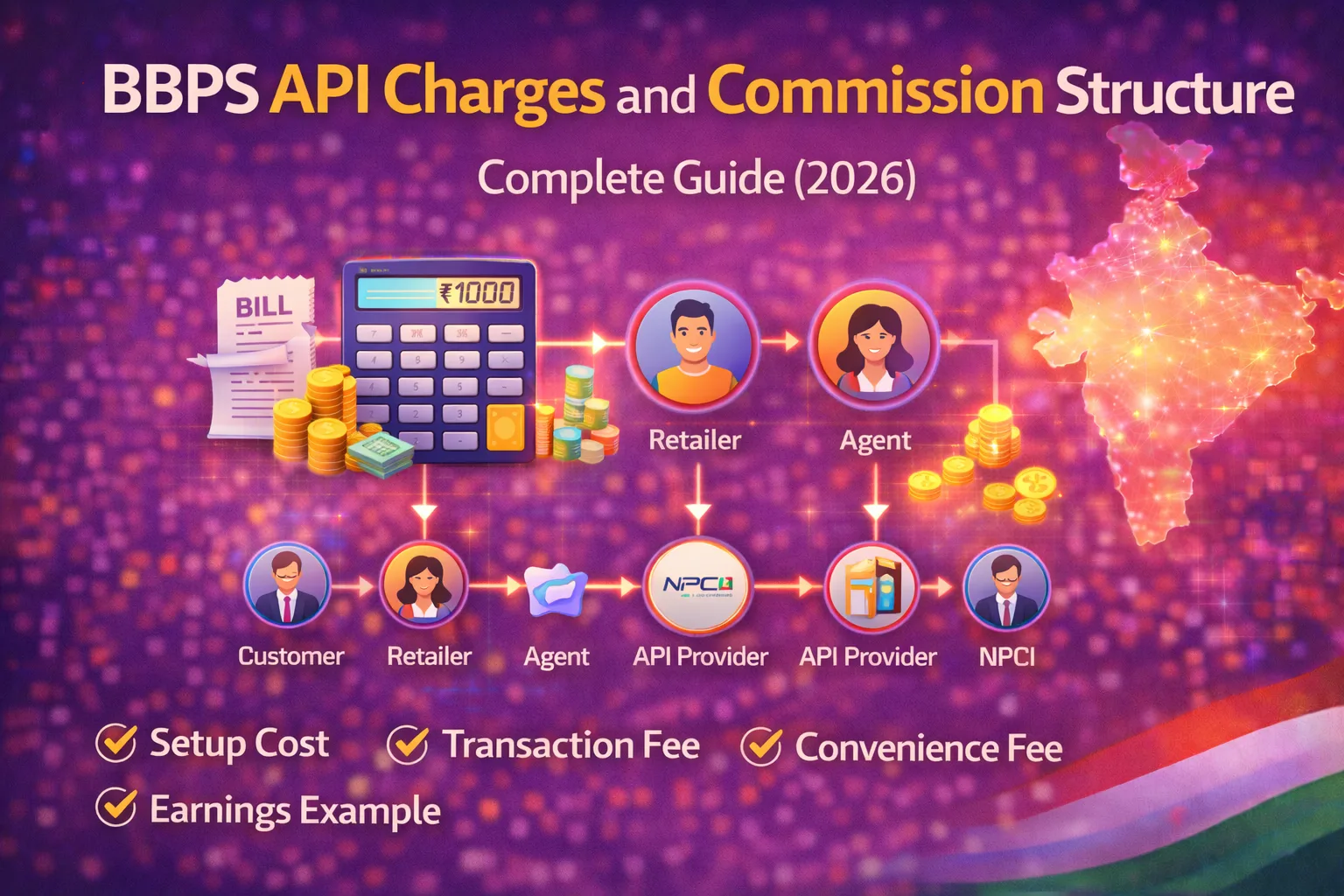
Understanding the BBPS API charges and commission structure is essential for any business planning to enter the bill payment ecosystem in India.
BBPS operates under a regulated framework managed by National Payments Corporation of India, ensuring transparency in pricing and revenue distribution.
For fintech startups, retailers, and distributors, knowing the cost and earning model helps in maximizing profits and planning scalability.
What is BBPS Pricing Model
The BBPS API charges and commission structure works on a multi-layer model involving:
- Customer
- Agent / Retailer
- API Provider
- BBPS Operating Unit
- NPCI
Each entity may share a portion of the transaction fee or commission depending on the agreement.
BBPS API Charges Breakdown
Setup Cost
BBPS API providers may charge initial setup fees depending on the business model:
- Basic onboarding: ₹500 – ₹800/year
- Distributor plans: ₹480 – ₹5,555
- White-label solutions: ₹15,000 – ₹25,000
Per Transaction Charges
Most providers charge a small fee per transaction:
- ₹3 – ₹5 per transaction (approx.)
Additionally, NPCI-based charges may apply internally between system participants.
Example:
- Around ₹2–₹3 transaction routing cost in some cases
Convenience Fee (Customer Side)
As per guidelines:
- ₹0–₹5 for bills up to ₹1000
- ₹5–₹15 for mid-range bills
- ₹15–₹25 for higher-value bills
Note:
- Digital payments often have zero convenience fee
- Cash payments may include charges
BBPS Commission Structure
Retailer / Agent Commission
Retailers earn commission on every transaction:
- Typically 1% to 5% per transaction
Distributor Commission
Distributors earn a share from retailer transactions:
- Commission split depends on provider
- Higher volume = higher margins
API Provider Earnings
API providers earn from:
- Transaction charges
- Service fees
- Platform usage
Example of BBPS Earnings
Scenario
- 100 transactions/day
- Avg bill value: ₹1000
- Commission: ₹5 per transaction
Earnings
- Daily: ₹500
- Monthly: ₹15,000
This shows how BBPS API commission structure creates consistent income.
Factors Affecting BBPS Charges and Commission
1. API Provider
Different providers offer different pricing
2. Transaction Volume
Higher volume = better commission
3. Payment Mode
Cash vs digital affects charges
4. Business Type
Retailer, distributor, or fintech platform
5. Biller Category
Different bill types may have different margins
How to Maximize BBPS Profit
To improve earnings:
- Choose high-commission provider
- Increase transaction volume
- Offer multiple services
- Focus on high-demand areas
- Provide fast and reliable service
API Marketplace
API Marketplace
API Marketplace
Why BBPS is Profitable
The BBPS API charges and commission structure is designed to:
- Ensure fair distribution of revenue
- Encourage agent participation
- Promote digital payments
Businesses benefit from:
- Recurring income
- Low operational cost
- Scalable model
FAQs
What are BBPS API charges
BBPS API charges include setup fees, transaction fees, and optional service charges depending on the provider.
How much commission can I earn in BBPS
Typically 1% to 5% per transaction depending on volume and provider.
Is BBPS API profitable
Yes, it offers consistent earnings with low investment and high demand.
Who decides BBPS charges
Charges are regulated by NPCI and implemented by BBPS providers.
Conclusion
The BBPS API charges and commission structure provides a balanced ecosystem for all participants.
With low setup costs, recurring commissions, and increasing demand for digital payments, BBPS remains one of the most profitable fintech opportunities in 2026.
Businesses that understand and optimize this structure can build a strong and scalable revenue model.